 Nutrixe
Plain cheese is gluten free. Milk, salt, rennet, cultures: no cereal goes into making it, and that holds for Comté as for camembert, for mozzarella as for parmesan. Blue cheeses too, according to lab tests, despite a stubborn reputation. Gluten only appears when cheese becomes a preparation: grated and blended, processed, flavoured, spreadable, made into a dessert, or placed on a board next to the bread.
Is cheese gluten free? No cereal in the recipe
Making cheese means curdling milk with rennet or cultures, draining, salting and ageing. At no point is a cereal needed. That is why the Italian Coeliac Association (AIC) considers traditional cheeses ‘always suitable’ for people with coeliac disease, with no special claim needed: ricotta, mozzarella, mascarpone, feta, fontina, parmesan, Grana Padano, provolone, gorgonzola, stilton, camembert, brie. The Spanish Society of Paediatric Gastroenterology likewise lists cheeses, cream and plain yogurts among safe foods.
What holds for gluten does not hold for lactose. At diagnosis, a damaged gut often digests lactose poorly, and some fresh cheeses can cause trouble for a few months: that is a separate question, covered in our article on lactose intolerance. Aged cheeses contain almost none.
Blue cheese: what the lab tests say
This is the most frequently asked question, and it has a real origin. Penicillium roqueforti, the mould in blue cheese, was long grown on rye bread, which contains gluten. The method has not disappeared: Roquefort Papillon explains on its website that it extracts its Penicillium ‘from the crumb of rye bread’ baked in its own oven. The Roquefort PDO specification, however, does not require bread: it asks for inoculation ‘with powders or cultures’ taken from strains from the caves of Roquefort-sur-Soulzon.
Which leaves the question: when the mould has grown on bread, is any gluten left in the cheese? In 2009, the Canadian Celiac Association had blue cheeses tested that were made with mould grown on media containing gluten, along with Penicillium cultures themselves. Using sensitive ELISA tests, gluten was below the limit of quantification in every sample. The mould does not carry the bread’s protein with it.
What we know
Plain blue cheeses
- No quantifiable gluten in the blue cheeses tested, even with mould grown on bread
- Gorgonzola and stilton classed ‘always suitable’ by the AIC
- Roquefort PDO: raw ewe's milk, salt, rennet, Penicillium
To check
Blue cheese preparations
- Roquefort sauces, blue cheese creams and spreads
- Flavoured or coated blue cheeses
- If you are very sensitive: talk to your gastroenterologist rather than cutting out a whole family of cheeses
Grated cheese and anti-caking agents
Bagged grated cheese clumps into a block unless it is coated in a fine powder. That is the anti-caking agent, and it is what worries people. In the products we checked, it is potato starch or cellulose: a big-brand grated Emmental checked in France lists ‘milk, salt, lactic cultures, potato starch’. Other grated cheeses contain none at all.
Wheat flour would have to be emphasised in the ingredient list, like any allergen in Europe. But blends (‘for gratins’, ‘for pizza’, ‘Italian mix’) combine several cheeses and sometimes other ingredients. Hence the AIC’s position: grated Parmigiano Reggiano and Grana Padano under their protected names (PDO) are permitted, while other grated cheeses and blends are at risk without the ‘senza glutine’ claim. The Madrid Coeliac Association likewise lists grated, portioned and sliced cheeses among those that may contain gluten.
Photos and ingredient lists quoted in this article: Open Food Facts, an open-licence collaborative database, checked on 25 and 26 September 2026. Recipes change: the label on the product in your hand is what counts.
Processed, spreadable and flavoured cheeses
The more processed a cheese is, the longer the list: emulsifying salts, thickeners, milk proteins, flavourings, herbs, spices, sometimes a filling. This is the family where the rare gluten-containing cheeses are found, and where associations ask you to read:
| Type of cheese | AIC (Italy) | Spain (ACSG, SEGHNP) |
|---|---|---|
| Traditional cheese (soft, hard, blue) | always suitable | safe if plain (SEGHNP) |
| Grated Parmigiano Reggiano and Grana Padano PDO | permitted | — |
| Other grated cheeses and blends | at risk | may contain |
| Processed, sliced, portions | at risk | may contain (ACSG, SEGHNP) |
| Flavoured spreads | at risk | may contain |
| Plant-based cheeses | at risk | — |
A plain cream cheese stays simple: Philadelphia sold in Spain, for example, lists milk, cream, salt, stabilisers and a preservative, with no cereal. We found no official statement from the brand on gluten: it is the label on your tub, with any ‘may contain’, that counts.
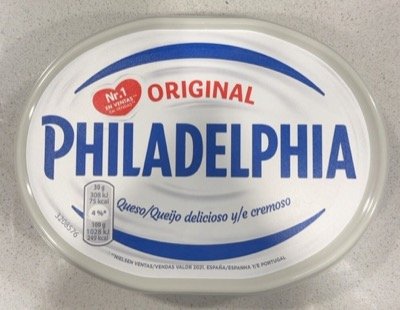
Two cases deserve a word. Cheeses aged or washed in beer: beer contains gluten, and we found no published analysis of how much remains in the rind or the paste. To be safe, stick to versions that make a commitment. Breaded or pastry-wrapped cheeses (breaded camembert, brie en croûte) obviously contain flour.
Yogurts and dairy desserts
Plain yogurt is made from milk and cultures. It is gluten free, and usually well tolerated even when lactose is a problem, because the cultures digest some of it.
Fruit, flavoured or ‘creamy’ yogurts add fruit preparations, flavourings and thickeners. The AIC classes them as at risk, since it cannot know every preparation; so does the Madrid Coeliac Association, for flavoured yogurts and those with fruit pieces.
Yogurts with cereals, muesli, granola, biscuits or malt contain gluten unless labelled ‘gluten free’: muesli and granola often contain oats or wheat, and malt is barley.
For desserts, read these above all:
- custard pots and crème caramel, set with a starch (often maize, not always);
- semolina pudding, made from durum wheat semolina: it contains gluten;
- liégeois, tiramisu and ‘cookie’ desserts, layered with biscuits.
Rice pudding needs only rice, milk and sugar; the shop-bought version gets read like everything else.
Raclette, fondue and the cheeseboard
The problem with a cheeseboard is almost never the cheese. It is what surrounds it.
Bread and crackers, first of all, sharing the board. A knife that goes from the bread to the cheese, crumbs on the Comté: that is everyday cross-contamination. At friends’ homes or in a restaurant, ask to be served before the bread arrives, or for a separate board.
Raclette: raclette cheese is a plain cheese, and potatoes are no problem. The risk comes from the cured meats served with it, which you should choose as we explain here.
Fondue: the mix of cheese and white wine is thickened with starch in many recipes, but ready-made fondues need reading. The real problem is the bread dipped into the shared pot: a single mouthful of ordinary bread contaminates the whole fondue. You need a separate pot, or a whole table eating gluten-free bread.
A few verified Nutrixe places serve cheese and boards without that risk. In Chamonix, Le Monchu flags its gluten-free fondue and bread on the menu; the kitchen is not dedicated, and the listing says so (4.4/5 from 5,695 reviews). In Milan, Sgrano Gluten Free serves boards of Tuscan cured meats and cheeses in a 100% gluten-free kitchen (4.5/5). In Berlin, Pondji makes Brazilian pão de queijo, the cheese bread made with cassava starch, in a kitchen with no gluten ingredients (4.7/5). And in Ajaccio, YAYOURT makes gluten-free frozen yogurt in a shop that also makes crêpes: the listing flags the risk of airborne flour (4.8/5).
At the supermarket, the short rule
The shorter the list, the fewer the questions. Milk, salt, rennet, cultures: that is a cheese. As soon as flavourings, thickeners, fillings or cereals appear, read everything, or scan it.
The Nutrixe scanner reads the list for you: it spots wheat, barley or malt under their disguised names and tells ‘contains’ apart from ‘may contain’. For the full method, see our guide to reading labels.
In short
- Plain cheese, from mozzarella to Comté, contains no gluten.
- Blue cheeses too according to lab tests, even when the mould was grown on bread.
- Grated: the anti-caking agent is usually starch or cellulose; blends need reading.
- Processed, sliced, flavoured spreads, plant-based cheeses, beer-washed cheeses: read them.
- Plain yogurt is safe; yogurts with cereals, biscuits or malt: gluten.
- On the cheeseboard, the danger is the bread and the knife, not the cheese.
This information is no substitute for medical advice. If dairy products bother you after diagnosis, talk to your gastroenterologist: it is often the lactose, and it is often temporary.


