Nutrixe
It is a short, almost innocent word, read without a second thought in an ingredient list. Malt is germinated barley. It contains gluten, and it is one of the most frequent reasons a corn, rice or chocolate product is not gluten-free.
What malt is
Malting a cereal means making it germinate by soaking, then stopping germination by kiln-drying. Germination activates enzymes that turn starch into sugars, which is what makes malt sweet and aromatic, and what makes it the basis of beer and whisky. The malted cereal is almost always barley; wheat (wheat beers) or rye are sometimes malted.
Several ingredients derive from it, all carrying gluten:
- malt extract, a concentrated syrup, widely used for taste and colour;
- malt flour, added to some flours and breads for crust colour;
- malt syrup, malt flavouring, roasted malt;
- malted drinks: malt powder for hot milk, “malted milk”.
Barley gluten (hordein) is fully present in malt: germination does not destroy it. European regulation therefore requires the word “barley” alongside: “malt extract (barley)”.
Where it hides
Breakfast cereals. The most frequent hiding place. Corn flakes or puffed rice, gluten-free by nature, get a barley malt extract for flavour. Result: corn flakes that contain gluten. Big brands now offer “gluten-free” versions made without malt; the claim on the box is the only criterion, not the main cereal.
Chocolate drink powders and hot-milk preparations whose “malted” taste is the whole point: barley is declared.
Biscuits and confectionery: toffees, bars, some “malt” chocolates, breakfast biscuits.
Salt-and-vinegar crisps, British brown sauces, pickles: through malt vinegar.
Bread and flours: a malt flour for the crust, a malt extract in a baguette, of no consequence in a product already made of wheat, but worth knowing for “gluten-free” flours that should not contain any.
Two boxes of corn flakes, side by side
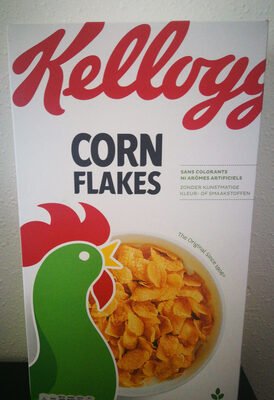
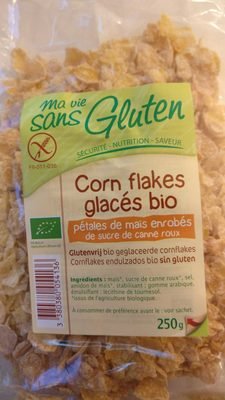
Photos and ingredient lists: Open Food Facts, a collaborative open-licence database, retrieved on 5 September 2026. Recipes change: the label on the box in your hand is what counts.
Malt vinegar
Malt vinegar is made by fermenting malted barley into alcohol, then into vinegar, without distillation. Unlike spirits, where distillation leaves gluten behind (as we explain), malt vinegar keeps what fermentation did not break down. Analyses find variable levels, sometimes under 20 ppm, sometimes above. Coeliac UK lists it among products to avoid, and it is everywhere in the United Kingdom: on fish and chips, in sauces, in flavoured crisps.
Elsewhere in Europe it is rare; on a trip to Britain it is the question to ask about anything “vinegar”. Wine, cider, spirit (white) and balsamic vinegars do not have this problem.
The look-alike words that have nothing to do with it
This is where confusion costs most, in both directions.
- Maltodextrin is not malt. It is a sugar obtained by hydrolysing a starch, and is considered gluten-free even when wheat-based, as we detail. Cutting out every maltodextrin product for fear of the word “malt” means going without for nothing.
- Maltose is a simple sugar, gluten-free.
- Maltitol is a sweetener, gluten-free.
- Rice or corn “malt” exists, malted rice syrup for instance, and contains no gluten if no barley was involved. The label says so: with no “barley” declared, it is not barley malt.
The practical rule: “malt” or “malt extract” followed by “barley” = gluten. “Malt” with no allergen declared, “maltodextrin”, “maltose”, “maltitol” = no gluten.
In short
- Malt is germinated barley; malt extract, flour, syrup and flavouring contain gluten.
- It makes many corn and rice cereals, chocolate drinks and biscuits not gluten-free.
- Malt vinegar, undistilled, is to be avoided as a precaution, especially in the UK.
- Maltodextrin, maltose, maltitol have nothing to do with malt.
Scan the box. The Nutrixe scanner spots barley malt extract in corn or rice cereals, where you least expect it. Discover the app.