 Nutrixe
At a party, plain crisps are nearly always the safest choice, Pringles are a no, and everything else comes down to the label. Gluten is not in the potato: it arrives through seasonings, coatings, added flours and factories that also make biscuits. Here is what the official ingredient lists say, brand by brand, in September 2026.
Plain or flavoured crisps: where gluten creeps in
A crisp starts with three ingredients: potatoes, oil, salt. Walkers Ready Salted, for example, contain potatoes, vegetable oils, salt and antioxidants, according to the brand’s website. No cereal.
The trouble starts with seasonings. Coeliac UK explains on its page about crisps that some flavourings contain wheat flour to help them coat the crisps, and some contain barley malt extract in the flavour. Either way, the product is not suitable unless it is labelled gluten free.
A concrete example from the French brand Brets: its barbecue and whisky crisps contain “malt extract (contains barley)”, while its plain barbecue crisps use rice flour and no malt. Same brand, same aisle, two answers. In the UK, malt vinegar-style flavours deserve the same scrutiny; we cover them in our article on malt and malt vinegar.
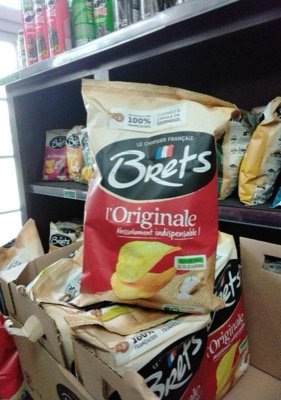
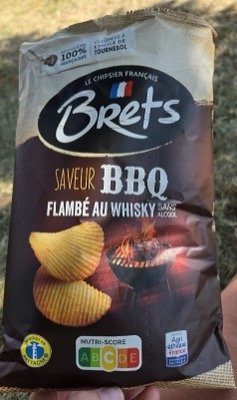
The second risk is the factory. Coeliac UK notes that crisps without gluten ingredients may still carry a contamination risk, flagged with “may contain gluten”. Walkers Ready Salted are “made in a factory that also handles: milk, wheat, gluten, barley, soya, celery, mustard”, and Walkers Salt & Vinegar carry “may contain … wheat and other cereals containing gluten”. Our article on may contain traces of gluten helps you decide what to do with these warnings.
Reassuring
What to look for
- Potatoes, oil, salt, and nothing else
- Flavourings with no wheat or malt in the list
- No "may contain wheat / gluten" statement
- Or a "gluten free" claim (under 20 ppm in the UK and EU)
Avoid or check
Red flags
- Wheat flour, wheat starch
- Barley malt extract, malt flavouring
- Pretzels, crackers, "crêpe crisps"
- "May contain cereals containing gluten"
Are Pringles gluten free? Wheat flour in the recipe
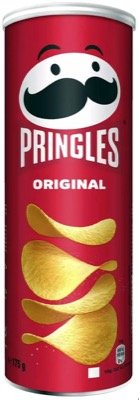
Pringles are not slices of potato. They are moulded from a dough of dried potato and flours, and one of those flours is wheat.
| Country | Pringles Original, according to pringles.com (September 2026) |
|---|---|
| United Kingdom | “corn flour, wheat flour, rice flour” |
| France | “farine de maïs, farine de blé, farine de riz” |
| Germany | “Maismehl, Weizenmehl, Reismehl” |
| Italy | “farina di mais, farina di frumento, farina di riso” |
The Original recipe is the same in all four countries, and it contains wheat. Pringles Nachos sold in Italy also contain “farina di frumento”. So, to answer a question that comes up often: no, Pringles are not gluten free in Italy either.
When the label says gluten free
In Germany, funny-frisch prints “Glutenfrei” on several of its Chipsfrisch flavours: Ungarisch (paprika), Salt & Vinegar, Currywurst. It is a regulated claim: in the UK and EU, a product labelled gluten free must contain no more than 20 mg of gluten per kilo, the threshold explained in our article on the 20 ppm limit.
One interesting detail: the Currywurst flavour, labelled “Glutenfrei”, also contains “yeast extract (contains BARLEY)”. That is not a contradiction in law, because the final gluten content is what counts. But if you avoid any barley-derived ingredient, out of caution or on medical advice, read the whole list, not just the logo.
By contrast, the same brand’s Brezli, small pretzels, are made with wheat flour and wheat malt flour. Same brand, same snack aisle.
Crackers, pretzels and savoury biscuits
Classic party nibbles (crackers, pretzels, cheese biscuits, breadsticks) are made from dough, so most often from wheat flour. Gluten free versions exist and are labelled as such, but the default assumption should be wheat until proven otherwise.
Two traps are worth a mention:
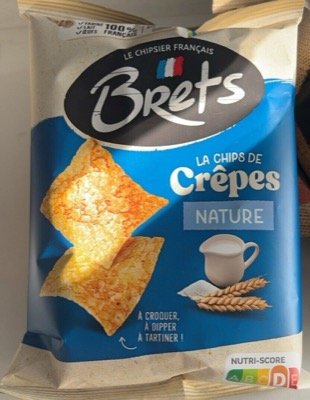
Crisps that are not potato crisps. Brets sells “chips de crêpes”, crêpe crisps under the same brand as its potato crisps, made with 48% wheat flour according to the official list.
Crisps made from “naturally gluten free” grains. Buckwheat contains no gluten, but it is easily contaminated. Brets’ buckwheat crisps carry “possible traces of cereals containing gluten”. We explain why in is buckwheat gluten free?.
Peanuts and nuts
Plain nuts are a sensible choice. The Italian coeliac association AIC lists “all kinds of nuts, in or out of their shells, roasted, salted, even with added vegetable oils” among permitted foods, while stressing that this general guidance does not replace reading the label on processed products.
Coated or flavoured peanuts are another matter: a crunchy coating can be made with wheat flour, and flavourings can contain malt. Same logic as crisps: ingredient list first, then trace statement.
Own-brand crisps and crisps abroad
Supermarket own-brand crisps are often made by contract manufacturers, who can change. A product that was fine last year may have a new supplier, and so a new ingredient list. Re-read the label on every new pack, even if it looks the same. Coeliac UK members can also check products in its Food and Drink Guide.
Abroad, the landmarks change too:
- in Italy, the website of the big crisp maker San Carlo publishes no information on gluten; AIC and its Prontuario remain the reference;
- in Brazil, Law 10.674 of 2003 requires every pack to say “contém glúten” or “não contém glúten”, and according to the coeliac federation FENACELBRA, the regulator Anvisa requires “contém glúten” whenever there is a contamination risk;
- in Spain, the coeliac federation FACE keeps a digital list of gluten free products in its CELIGUIA app, for members of its associations.
At a party, the risk is not only in the packet. A bowl of gluten free crisps that has had hands full of cracker crumbs in it is no longer gluten free. Help yourself first, or ask for a separate bowl.
Nibbles at friends’ or in a bar
At friends’, the easiest option is to bring your own packet and share it: nobody notices that the plain crisps are “yours”. Our tips for that kind of evening are in a gluten free dinner at friends’.
In a bar, crisps served in a bowl rarely come with their packet. Better to pick a place where the question does not arise. A few 100% gluten free addresses from the Nutrixe map:
- Golden Cross, Coventry: a historic pub whose whole menu has been gluten free since 2018, rated 4.4 from over 1,200 reviews.
- LaLina Bravas y Tapas, Madrid: a tapas bar in La Latina with an entirely gluten free menu, rated 4.3 from over 3,700 reviews.
- Mantra, Milan: a tapas and cocktail bar in Isola with a 100% gluten free menu to avoid any cross-contamination, rated 4.3.
The Nutrixe app scanner reads the ingredient list behind the barcode and flags wheat flour, malt, barley or trace statements. It never tells you “this is gluten free”: it shows what the list contains and what remains to check. Free and unlimited: see the app. For chocolate and sweets, read are Haribo gluten free?.
Photos and ingredient lists: Open Food Facts, a collaborative open-licence database, retrieved on 26 September 2026. Recipes change: the label on the packet in your hand is what counts.
In short
- Plain crisps (potatoes, oil, salt) contain no gluten ingredient; the risk comes from seasonings and the factory.
- Seasonings can contain wheat flour or barley malt extract; Walkers Ready Salted are made in a factory that handles wheat and barley.
- Pringles Original contain wheat flour in the UK, France, Germany and Italy.
- A “gluten free” claim guarantees under 20 ppm, even if the list includes a barley derivative.
- Crackers, pretzels and crêpe crisps are wheat-based; buckwheat crisps may contain traces.
- Plain nuts: a good choice; coated or flavoured: read the label.
Ingredient lists checked in September 2026 on the official Walkers, Pringles, Brets and funny-frisch websites. Recipes change: the label on the pack you buy is what counts. If you react despite these precautions, talk to your gastroenterologist.


