 Nutrixe
A bag of Haribo bears bought in Lyon, London or São Paulo has the same name, the same logo and often the same colours. It is not the same product. No major confectionery brand guarantees an identical recipe everywhere, and what the label says about gluten changes from one country to the next, sometimes for the very same sweet. Here is what each brand says about itself, on its own official websites, country by country, in September 2026.
Why a brand changes its recipe from country to country
A global brand does not have one factory; it has dozens. Each buys ingredients locally: glucose syrup may come from maize or wheat, starch from potato or wheat, depending on the market. Each country also has its own labelling rules. The result: two sweets with the same name can have different ingredient lists and different warnings.
The clearest example is Haribo’s Goldbears. In the United States, the official list starts with “glucose syrup (from wheat or corn)” and includes artificial colours. In Germany, Goldbären are coloured with fruit and plant concentrates. In Brazil, the recipe contains water, palm oil and colours such as tartrazine. Same bear, three recipes.

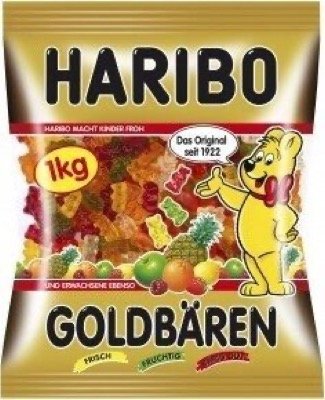
The German coeliac society, the Deutsche Zöliakie Gesellschaft (DZG), spells it out about its own product database: it only applies to products sold in Germany, and a food with the same name made abroad or for export may contain gluten ingredients. Keep that rule in mind for everything that follows.
Are Haribo gluten free? The textbook case
Haribo turns up in “gluten free” searches in English, French, German, Italian and Spanish. It is also the brand where the answers differ most from one country to another.
| Country | What Haribo’s official website says (September 2026) |
|---|---|
| United Kingdom | UK-made products “do not contain gluten”, except Pontefract Cakes (wheat); some imported products say “may contain traces of gluten” |
| France | Tagada, Dragibus, Goldbears: “may contain traces of wheat” |
| Germany | Goldbären: “may contain traces of milk, wheat” |
| Italy, Spain, Portugal | Goldbears under their local names: possible traces of wheat (checked on the bears only, not on the rest of the range) |
| United States | Goldbears: glucose syrup and dextrose “from wheat or corn”, “may contain wheat”; Haribo does not rule out traces of gluten |
| Brazil | Ursinhos de Ouro: “may contain wheat, rye, barley, oats”, hence “contém glúten” |
Three points to help you read this table.
Wheat glucose syrup is not the problem. In Europe and the UK, glucose syrup made from wheat is so refined that it is exempt from allergen labelling; we explain why in our article on maltodextrin and glucose syrup. A “may contain traces of wheat” warning, on the other hand, flags a contamination risk in the factory.
Some Haribo products really do contain wheat. Spaghetti-style sweets and liquorice are the typical examples: Pontefract Cakes in the UK, the Brazilian Spaghetti Morango (wheat flour), and Haribo US says it uses wheat-containing ingredients in some products. A mixed bag can combine sweets made to different recipes.
“Traces” does not carry the same weight everywhere. In Brazil, every pack must state “contém glúten” or “não contém glúten” (Law 10.674 of 2003), and according to the Brazilian coeliac federation FENACELBRA, the regulator Anvisa requires “contém glúten” whenever there is a contamination risk. In Europe and the UK, “may contain” is voluntary and not quantified: the decision is yours. Our article on traces of gluten explains how coeliacs and their associations weigh it up.
Nutella and chocolate spreads
On its German website, Ferrero states that the Nutella recipe is “the same worldwide”: sugar, palm oil, hazelnuts, skimmed milk powder, fat-reduced cocoa, soya lecithin, vanillin. No cereals.
What differs is what Ferrero writes next to it:
- the Italian site adds “Senza glutine” under the ingredients, as it does for Nutella Plant-Based;
- the German site answers “Der nutella® Brotaufstrich ist glutenfrei” in its FAQ;
- the US site says the spread is gluten free, but not Nutella & Go, Nutella Biscuits or Nutella B-ready;
- the French site lists the ingredients with no mention of gluten.
What that means for you: the classic spread has no gluten ingredient. The spin-offs are another matter. Nutella & Go contains breadsticks or pretzels; Nutella Biscuits and B-ready are not gluten free according to Ferrero. And crêpes, waffles or muffins “with Nutella” from a stall or the bakery aisle are ordinary baking, usually with wheat flour.
Kinder, Milka, Lindt
Kinder: same chocolate, different labels
With Kinder, it all depends on the product.
- Kinder Chocolate bars and Kinder Surprise: the ingredient lists published by Ferrero contain no cereals. The Italian site adds “SENZA GLUTINE”; the Brazilian site adds “NÃO CONTÉM GLUTEN” for Kinder Ovo. The UK and French sites say nothing about gluten.
- Kinder Bueno contains wheat flour (UK site).
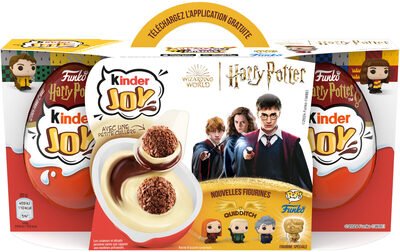
- Kinder Joy contains wheat flour, wheat starch and barley malt extract (UK site).
Kinder Surprise and Kinder Joy look alike on the shelf: an egg and a toy. One has no cereals in its recipe; the other has three ingredients from wheat or barley.
Lindt: barley malt extract
Lindt explains its position in detail. In its FAQ (UK, Canadian and German sites), the brand says several of its chocolates contain gluten, as a cereal or a barley component, and that when barley malt extract is the only cereal ingredient, the amount is so small that the product stays below 20 mg of gluten per kilo. The milk chocolate Gold Bunny contains “Gerstenmalzextrakt” (barley malt extract) according to the German site.
For people who want no cereal ingredient at all, Lindt’s UK site lists chocolates made without any cereal or barley malt: Excellence 70%, 85%, 90% and 99%, Excellence A Touch of Vanilla white, Lindor Strawberries and Cream, and Lindor white chocolate truffles and bars. The Canadian site gives a slightly different list (Excellence 70% to 100%) and says Lindt cannot guarantee its chocolates are “100% gluten free”. Once again, the list varies by country.
On barley malt itself, and why some associations accept it under 20 ppm while others advise against it, see our article on malt and malt vinegar.
Milka: the label and nothing else
On the official Milka websites we checked in France and Germany, we found neither full ingredient lists on the product pages nor any statement on gluten. Without an official source, we will not say whether a Milka bar is gluten free. The Milka range mixes plain bars with biscuit bars (Milka Oreo, Milka LU on the French site), which contain biscuits and therefore, in all likelihood, wheat flour. Only the label on the bar in your hand settles it.
Supermarket own-brand sweets
Own-brand sweets are often made by contract manufacturers, who can change from one contract to the next. There is no reason for an own-brand recipe to stay the same over time, or between countries for the same retailer.
Coeliac associations know this and publish lists, but they are national and often members-only: Coeliac UK’s Food and Drink Guide, the DZG’s “Einkaufen mit Zöliakie” database in Germany, the FACE digital list in Spain (in its CELIGUIA app), AIC’s Prontuario in Italy. AIC classes sweets and chocolate as “at risk” foods, to be bought only with a “senza glutine” label. Coeliac UK also publishes a free Easter list each year; our gluten free Easter eggs guide covers it.
The travel trap. You know “your” safe sweets at home. Abroad, the same name can hide another factory. Read the label as if you had never seen the product, especially in Brazil, the United States or shops selling imported American sweets.
The ingredients to watch
In sweets and chocolate, gluten rarely hides in the main ingredient. Look for:
- wheat flour: spaghetti sweets, liquorice, filled sweets, chocolate with biscuit or wafer;
- barley malt extract: milk chocolate, crispy cereal pieces, coated balls;
- crispy or puffed cereals: puffed rice has no gluten in itself but is sometimes malt-flavoured, and wheat flakes or balls are common;
- unspecified starch: in the UK and EU, wheat starch must be named as such; elsewhere the rules vary;
- trace warnings: “may contain wheat”, “may contain gluten”, “pode conter trigo”.
Glucose syrup and maltodextrin, even from wheat, are not a problem in Europe and the UK. Malt almost always is.
Scan before you buy abroad
Reading a label in Portuguese or German while standing in an aisle takes time. The Nutrixe app scanner reads the ingredient list behind the barcode and tells you what it finds: a gluten ingredient, malt, a trace warning, or none of these. It never tells you “this is gluten free”: it shows you what the list contains and what remains to check. The scanner is free and unlimited: see the app.
For nibbles, read our piece on whether Pringles and crisps are gluten free. And before you shop, our guide to reading gluten free labels covers the basics.
Photos and ingredient lists: Open Food Facts, a collaborative open-licence database, retrieved on 26 September 2026. Recipes change: the label on the packet in your hand is what counts.
In short
- The same brand does not have the same recipe or wording in every country: American, German and Brazilian Goldbears are three different products.
- Haribo UK says its UK-made sweets do not contain gluten; Haribo France and Germany warn of wheat traces; Haribo Brazil writes “contém glúten”.
- Nutella spread has no cereals; Nutella & Go, Biscuits and B-ready are not gluten free.
- Kinder Surprise and Kinder Chocolate have no cereals in their recipe; Kinder Bueno and Kinder Joy do.
- Some Lindt chocolates, such as the milk Gold Bunny, contain barley malt extract, below 20 ppm according to the brand.
- Association lists are national: they do not cover a product bought abroad.
Checked in September 2026. Recipes change without notice. This information comes from the brands' and associations' official websites at that date; only the label on the pack you buy counts.


