Nutrixe
Raw meat contains no gluten. Processed meat can: as soon as meat is minced, bound, cooked in brine or flavoured, wheat can get in through a binder, a breadcrumb or a flavouring. Hence a simple rule that patient associations all apply: a few cured meats are safe by nature, everything else needs reading. And the list of safe products is not quite the same from one country to another.
Are sausages gluten free? Why wheat gets in
Industrial processed meat needs three things that wheat supplies cheaply.
- Binding and holding water. Sausage meat or a reformed cooked ham keeps its juices and shape better with a starch or flour. Often potato starch or maize starch, sometimes wheat.
- Bulking. Breadcrumbs (the British ‘rusk’) or flour add volume and soften the texture.
- Flavour. Flavourings, hydrolysed vegetable proteins, yeasts: the same enhancers as in stock cubes, with the same risks.
Then there is the factory: the same production line can make a plain sausage and then a breaded one.
The British case: rusk
In the UK, the sausage is traditionally a breadcrumb sausage. Rusk, a crushed wheat biscuit, is part of the classic recipe. Richmond thick pork sausages, a common British brand, contain ‘rusk (wheat)’ and wheat starch, according to their ingredient list checked in September 2026. Coeliac UK lists sausages among the processed foods where gluten hides.
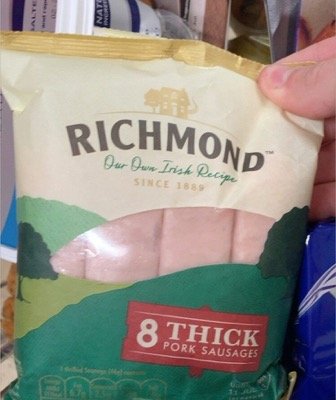
The result is a paradox for travellers: the full English breakfast is a trap, even though sausages labelled ‘gluten free’ are also on the shelves. In the land of rusk, the claim on the pack makes all the difference.
Photos and ingredient lists quoted in this article: Open Food Facts, an open-licence collaborative database, checked on 25 and 26 September 2026. Recipes change: the label on the product in your hand is what counts.
Cured ham and cooked ham: two different products
Cured ham is a leg of pork salted and then dried. Parma ham, San Daniele, serrano, Bayonne ham: meat and salt, sometimes spices. It is the safest product in the aisle. The AIC lists it among cured meats that are ‘always permitted’, with speck, bresaola, culatello and lard, without requiring any claim.
One AIC detail that surprises people: the fat that covers the cut face of a cured ham while it matures (the sugna) is a mixture of fat and flour. The association says to remove it before eating, and that even if it is contaminated, it does not migrate into the edible part.
Cooked ham is another story. It is a recipe: brine, curing salt, sugars, flavourings, sometimes starch or fibre to hold a ‘reformed’ ham together. A standard big-brand cooked ham we checked in France contains only pork, salt, stock, sugar, an antioxidant and vinegar; others, especially budget ranges, add ingredients you need to read. Hence cautious positions:
- the AIC classes prosciutto cotto as at risk, to be bought with the ‘senza glutine’ claim;
- the Madrid Coeliac Association (ACSG) only classes ‘extra’ grade cooked ham as gluten free, the top quality category in Spain.
Salami, saucisson, chorizo
Dry sausages, salamis and chorizos are raw cured meats, fermented and then dried. Their traditional recipe needs no cereal: meat, fat, salt, spices, cultures. But industry often adds lactose, dextrose, flavourings and sometimes a binder.
The two big associations of southern Europe reach the same conclusion:
- the AIC writes that gluten can be present in many salumi, ‘cooked, raw, fresh or aged’, brought in by additives, processing aids, flavourings or contamination, and recommends buying only those carrying the ‘senza glutine’ claim, apart from the five cured meats that are always permitted;
- the ACSG lists chorizo, morcilla, salchichón and sausages among products that may contain gluten; the Spanish Society of Paediatric Gastroenterology (SEGHNP) likewise names mortadella, chorizo and chóped.
In practice, in Italy as in Spain, look for ‘senza glutine’ or ‘sin gluten’ on the pack: it is the only wording that commits the manufacturer. We come back to this in our articles on Italian dishes and Spanish dishes.
Surimi: fish and wheat
Surimi is a white fish paste, bound and flavoured to imitate crab meat. Starches are added to get that texture. In France, they are often wheat: the Coraya and Fleury Michon surimi sticks we checked in September 2026 contain ‘wheat starch’ or ‘starches (including wheat)’, sometimes also flavourings containing wheat.
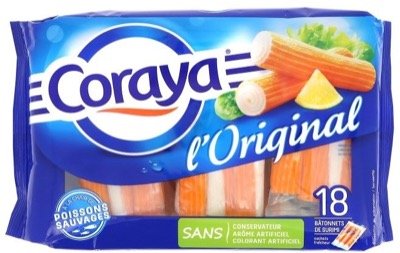
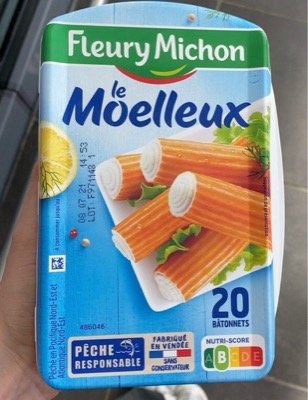
Beware one possible confusion. There is a purified wheat starch allowed in gluten-free products, but it is only permitted in a product carrying the ‘gluten free’ claim. In ordinary surimi, wheat starch is a gluten ingredient like any other. The AIC classes surimi as an at-risk food.
Same cured meat, very different countries
References and habits change from one country to the next:
| Country | The reference | What to know |
|---|---|---|
| United Kingdom | Coeliac UK | Standard sausages often contain wheat rusk; ‘gluten free’ versions are on the shelves |
| Italy | AIC | Five cured meats always permitted; everything else with ‘senza glutine’ |
| Spain | ACSG, SEGHNP | Serrano and extra-grade cooked ham safe; chorizo, morcilla, sausages need reading |
| Germany | DZG | ‘Einkaufen mit Zöliakie’ database, members only, valid for products sold in Germany |
| Brazil | Law 10.674/2003 | Every industrial food must state ‘contém glúten’ or ‘não contém glúten’ |
Brazil is the simplest case for shoppers: the law requires every processed food to say whether or not it contains gluten. A packaged linguiça sausage therefore shows the answer on its label.
At the butcher’s and the deli counter
At the counter there is no label, and two extra risks.
The house recipe. The butcher’s sausage, the terrine, the pork pie, the black pudding: every artisan has their own recipe, and breadcrumbs, flour or bread are common. The only reliable answer is the ingredient list, which the shop must be able to give you: in Europe, allergen information is compulsory for unpackaged food too.
The slicer and the worktop. A perfectly safe cured ham, sliced on the same machine as a breaded roast or a wheat-containing mortadella, is no longer quite safe. Ask for slicing on a cleaned machine, or choose labelled pre-packed meats. It is the same logic as cross-contamination in the kitchen.
Breaded and pastry-wrapped products are out. Cordon bleu, breaded escalope, sausage rolls, pâté en croûte, frankfurters in pastry: here wheat is not a risk, it is an ingredient.
What Nutrixe’s listings show
A few verified places show that gluten-free cured meats exist, artisan ones included.
- Pig and Potato, in York, serves homemade sausages in an entirely gluten-free kitchen: rare in the land of rusk (4.6/5 from 93 reviews).
- La de Rosi, in A Coruña, is a 100% gluten-free grocer and deli with a butchery counter (4.7/5).
- Bontà senza Glutine, in San Benedetto del Tronto, advertises its cured meats and cheeses as ‘senza contaminazione’ in a dedicated shop (4.5/5).
- O Grão Da Mesma Mó, in Évora, a restaurant certified by the Portuguese coeliac association, serves Alentejo black pork charcuterie in a gluten-free kitchen (4.6/5).
- Gramazio Fine Cuts, near Melbourne, is an entirely gluten-free butcher certified by Coeliac Australia. Its Google rating is middling (3.0/5), which says nothing about safety but is worth knowing.
For everything else, there is the Nutrixe map and the scanner: in the supermarket, the scanner spots the ‘rusk’, ‘wheat starch’ or ‘flavourings (wheat)’ that the eye skips over.
In short
- Cured ham, speck, bresaola, culatello, lard: safe by nature according to the AIC. Remove the floury fat from ham cut at the counter.
- Cooked ham, sausages, saucisson, salami, chorizo, mortadella: industrial recipes, buy them with the ‘gluten free’ claim.
- In the UK, standard sausages often contain wheat rusk.
- The big French surimi brands we checked contain wheat starch.
- At the butcher’s, ask for the recipe and slicing on a clean machine.
This information is no substitute for medical advice. If you react despite a strict diet, sliced meats and deli-counter products are common sources of contamination to review with your gastroenterologist.