Nutrixe
A flavouring, even a “natural” one, can contain gluten, but in the EU it can’t hide it: if a flavouring is made from malted barley or wheat, those cereals must be named and emphasised in the ingredients list. The word “natural” says nothing about gluten; it says where the taste comes from. What matters is what’s written around it.
What the law calls a “flavouring”
Regulation (EC) No 1334/2008 defines flavourings as products added to food to give it an odour or taste, not intended to be eaten as such. It distinguishes several families:
- flavouring substances, defined molecules (vanillin, for example);
- flavouring preparations, obtained from foods or plants by physical, enzymatic or microbiological processes;
- thermal process flavourings, produced by heating a mixture containing a source of nitrogen and a sugar;
- smoke flavourings and flavour precursors.
On the pack, Regulation (EU) No 1169/2011 allows the simple word “flavouring(s)”, or a more specific name. One family has its own name: “smoke flavouring”, sometimes with its wood (“smoke flavouring produced from beech”).
“Natural”, “natural X flavouring”: what the words mean
The word “natural” is governed by Article 16 of Regulation 1334/2008:
- “Natural flavouring” on its own: the flavouring component consists only of natural preparations and substances, from several sources.
- “Natural vanilla flavouring”: at least 95% of the flavouring component comes from vanilla.
- “Natural lemon flavouring with other natural flavourings”: only part of it comes from lemon, whose taste remains recognisable. That’s the wording on a Carte d’Or lemon sorbet we checked on 16 November 2026, none of whose ingredients contains gluten: “No gluten in the ingredients”.
None of these rules mentions cereals. “Natural” means “taken from a natural material”, and barley is one.
Where gluten can hide
A flavouring is a small ingredient made of other ingredients. Regulation 1169/2011 explicitly covers any ingredient “derived from” an allergen and “still present in the finished product, even if in an altered form”: wheat or barley in a flavouring must be declared like anything else. The exemptions that let manufacturers leave out a flavouring’s carriers and processing aids apply “without prejudice” to the allergen rule. Here are the ways in.
Barley malt
Barley malt flavouring and malt extract give a toasted, sweet taste to breakfast cereals, biscuits and crisps. It’s barley: our article on malt and malt vinegar explains why, and what to make of the few products that contain it while being labelled gluten free.
Wheat proteins
A “stock” or “meaty” taste often comes from hydrolysed vegetable protein. When it’s wheat, the label says so: that’s the case of Maggi liquid seasoning (Arôme Maggi in France, Maggi Würze in Germany), whose list starts with “flavourings (wheat proteins)”. Our article on stock cubes and condiments reviews the bottle and the cubes, and our article on hydrolysed vegetable protein explains why hydrolysis isn’t enough.
A compound flavouring
A crisp or sauce seasoning can contain wheat flour or wheat starch. The label then says so in brackets: “flavouring (contains wheat)”, “natural flavourings (crustaceans, wheat)”.
What isn’t a problem
Wheat maltodextrin and wheat glucose syrup, often used as flavouring carriers, are exempt from allergen labelling under the regulation, and Coeliac UK considers them safe for people with coeliac disease. Our article on maltodextrin explains this case, which shouldn’t worry you.
Smoke flavouring
Regulation 1334/2008 defines it as a product obtained by fractionating and purifying condensed smoke: the raw material is wood. Nothing in its definition involves a cereal. In a “barbecue” seasoning, it’s the other ingredients you need to read.
Three packets we checked
These three products are sold in France.


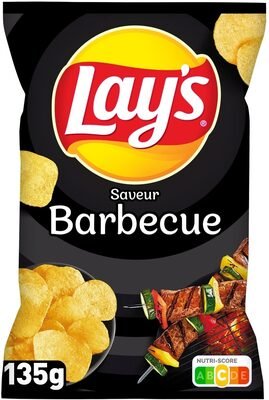
Photos and ingredient lists: Open Food Facts, a collaborative open-licence database, retrieved on 16 November 2026. Recipes change, and the same brand sells different recipes in different countries: the label on the packet in your hand is what counts.
What the Nutrixe scanner does
The scanner reads gluten cereals wherever they appear in the list, brackets included: “barley malt flavouring” or “flavouring (contains wheat)” give “Contains gluten”. A “flavouring” or “natural flavouring” with no cereal named doesn’t change the verdict on its own: EU law requires barley and wheat to be named, and the scanner reads what is written. A malt flavouring in German (Gerstenmalzextrakt) or Italian (estratto di malto d’orzo) is read the same way.
What’s still at risk
- The factory and traces. The Italian Coeliac Association (AIC) classes flavourings as “at risk” ingredients and advises eating a flavoured product only if it is labelled “senza glutine”. A traces warning is read as on any product: see “may contain” warnings.
- American products. In the United States, the list may simply say “natural flavor”, a category that includes protein hydrolysates. Wheat must be declared, but barley and rye are not among the major allergens of US law.
- Spice blends. A blend of spices alone is fine according to the AIC; a seasoning that adds flavourings, starches or additives needs reading in full.
The table
| No particular risk | To check | Contains gluten |
|---|---|---|
| “Flavouring”, “natural flavouring” with no cereal named, in a gluten-free product | Flavoured product with a traces warning | Barley malt flavouring, malt extract |
| Smoke flavouring in a list with no gluten cereal | “Natural flavor” on an American product | “Flavouring (contains wheat)”, “flavourings (wheat proteins)” |
| Wheat maltodextrin or glucose syrup as a carrier | Loose “spices and flavourings” seasoning | Classic Maggi liquid seasoning |
In short
- “Natural” tells you where the taste comes from, not whether there’s gluten.
- In the EU, barley and wheat in a flavouring must be named and emphasised.
- Common traps: barley malt flavouring (Rice Krispies) and wheat proteins (Maggi).
- Smoke flavouring comes from wood; it’s the rest of the seasoning you read.
Barley as the fourth ingredient of a rice cereal? The Nutrixe scanner reads malt and wheat right into the brackets of a flavouring. Discover the app.
For other ambiguous ingredients: modified starch, barley, crisps and snacks and breakfast cereals.
Sources
- Regulation (EC) No 1334/2008 on flavourings, Article 3: definitions (flavouring substance, flavouring preparation, thermal process flavouring, smoke flavouring, flavour precursor); Article 16: conditions for “natural”, “natural X flavouring” (at least 95%) and “… with other natural flavourings”. Consulted on 16 November 2026.
- Regulation (EU) No 1169/2011: Article 9(1)(c) (ingredient derived from an allergen and still present, even in an altered form); Article 20 (omissions “without prejudice to Article 21”); Article 21 (allergen emphasised); Annex II (cereals containing gluten, and the exemption of wheat-based maltodextrins and glucose syrups); Annex VII, Part D (designation of flavourings and smoke flavourings). Consulted on 16 November 2026.
- Coeliac UK, How to read food labels: wheat-based maltodextrins among the exempt ingredients that are safe for people with coeliac disease; the gluten cereal must be emphasised in the list. Consulted on 16 November 2026.
- AIC, L’ABC della dieta del celiaco (in Italian): flavourings classed “a rischio”, to be eaten with the “senza glutine” claim; blends made only of spices suitable. Consulted on 16 November 2026.
- Code of Federal Regulations, Title 21, § 101.22: definition of “natural flavor” (protein hydrolysates included) and declaration under that single term. Consulted on 16 November 2026.
- FDA, Food Allergies: the nine major food allergens under US law include wheat, but not barley or rye. Consulted on 16 November 2026.
- Open Food Facts, product entries 5053827185738 (Kellogg’s, Rice Krispies), 3168930009207 (Doritos, Sweet Chilli Pepper), 3168930164661 (Lay’s, barbecue) and 8711327386143 (Carte d’Or, lemon sorbet), consulted on 16 November 2026.
This information is no substitute for medical advice. If you have coeliac disease, build your diet with your doctor or a dietitian, and a patient association such as Coeliac UK or, in the US, the Celiac Disease Foundation can support you.