Nutrixe
In the cupboard, gluten rarely hides where you expect it. Stock cubes and liquid seasonings are the most common traps, because wheat is used there as a flavour enhancer, and nobody pictures a cereal in chicken stock. Mustard, balsamic, ketchup and mayonnaise are usually free of gluten grains, but each family has its exceptions, and they change from one country to the next.
Gluten free stock cubes? The first suspect
A stock cube is mostly salt, fat, a starch, flavourings and a flavour enhancer. Wheat can come in through two doors.
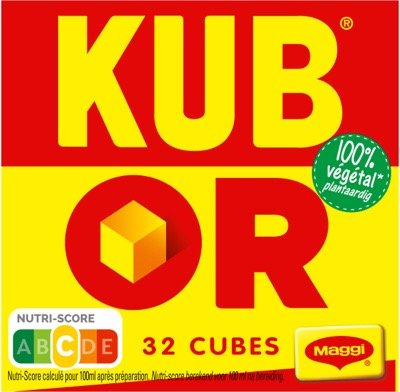
Through the flavour enhancer. To give a ‘meaty’ taste to a stock that contains very little meat, manufacturers use hydrolysed vegetable proteins, often from wheat. On a label this reads ‘hydrolysed wheat protein’ or, in France, extrait végétal aminé (blé). Maggi’s Kub Or, one of the best-known cubes in France, contains it: its ingredient list includes an ‘extrait végétal aminé (BLÉ)’, an amino vegetable extract from wheat. In the UK, gravy granules are worth the same scrutiny: the ingredient list of Bisto gravy granules we checked includes wheat flour.
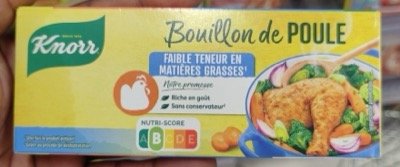
Through the factory. Other stocks have no gluten grain in the recipe but are made on lines that handle them. A Knorr reduced-fat chicken stock sold in France lists no wheat, barley or rye, yet carries the warning ‘may contain: celery, milk, gluten, mustard’. We have written a whole article on that warning: it is not tied to any threshold, and without a ‘gluten free’ claim next to it, nobody knows what it covers.
Patient associations say the same. The Italian Coeliac Association (AIC) classes stock cubes, stock preparations and meat or vegetable extracts as at-risk foods: eat them only if they carry the words ‘senza glutine’. Coeliac UK names stock cubes among the products where gluten turns up, alongside soups, sauces and sausages, and publishes a ready-made ‘Stocks and gravies’ list.
The simplest answer is a cube labelled ‘gluten free’: they exist, and that is the only wording that commits the manufacturer. And homemade stock, from bones, vegetables and herbs, settles the question at source.
Photos and ingredient lists quoted in this article: Open Food Facts, an open-licence collaborative database, checked on 25 and 26 September 2026. Recipes change, and the same brand sometimes sells different recipes in different countries: the label on the product in your hand is what counts.
Maggi seasoning and other ‘flavour’ sauces
Maggi seasoning, the little brown bottle, is a concentrate of hydrolysed vegetable proteins. In the bottle sold in France, Germany and Switzerland under the same barcode (Maggi Würze in Germany), those proteins are wheat proteins, and wheat is declared as an allergen.
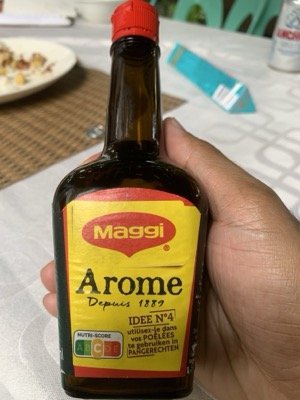
You sometimes read that hydrolysis, which chops proteins into small pieces, ‘destroys the gluten’. That is not what the labelling says: wheat is still declared, and the product makes no ‘gluten free’ claim. Until a bottle commits to 20 ppm, leave it on the shelf.
The same logic applies to other brown liquid seasonings. Standard soy sauce contains wheat: we compared three bottles from one brand, and even a ‘tamari’ can contain it. Lea & Perrins Worcestershire sauce has barley malt vinegar as its first ingredient. HP Sauce, the British brown sauce, combines barley malt vinegar and rye flour.
Some German readers look for a Maggi ‘from Poland’ said to be different. We found no official source from the brand confirming a gluten-free recipe in another country: we can neither confirm nor rule it out. If you bring a bottle home, its ingredient list decides.
Is mustard gluten free? A simple recipe, some tricky specialities
A classic strong mustard is water, mustard seeds, spirit vinegar, salt, an acidity regulator and a preservative. No gluten grain. Spirit vinegar is made by distillation, which leaves proteins behind; it is considered gluten free even when the alcohol comes from a cereal.
The trap lies elsewhere: in specialities that carry the word ‘mustard’ without being strong mustard. From the French brand Amora, two jars sitting side by side tell different stories:
No gluten grain in the list
Amora strong mustard
- Water, mustard seeds, spirit vinegar, salt
- Citric acid, potassium disulphite
- No ‘gluten free’ claim: also look for any ‘may contain’
Contains gluten
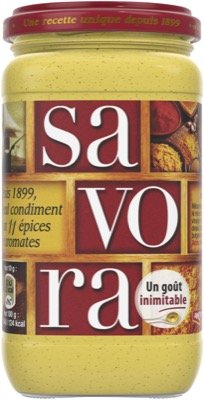
Amora Savora
- Dijon mustard 40%, then barley malt vinegar 27%
- Wheat flour, sugar, honey, spices
- A ‘Dijon mustard speciality’, not a mustard
The same care goes for prepared English mustard, some recipes of which contain wheat flour, and for sweet German mustards (süßer Senf), which vary by manufacturer. Flavoured mustards (honey, herb, beer) need a full read: a ‘beer’ mustard is not gluten free by default. The AIC also classes mustard, like mayonnaise and ketchup, as an at-risk sauce without the ‘senza glutine’ claim.
Balsamic vinegar and balsamic glazes
Balsamic Vinegar of Modena PGI is made from cooked or concentrated grape must and wine vinegar, with at most 2% caramel allowed by its specification. Traditional balsamic PDO (from Modena or Reggio Emilia) is made only from cooked must, aged for years in wooden barrels. Neither contains a cereal, and the AIC lists both as permitted foods. It adds balsamic condiments without a protected name, provided they contain only cooked must, wine vinegar and sulphites.
Balsamic glazes (also sold as ‘creams’ or ‘reductions’) are another matter: glucose syrup and a thickener are added. In the products sold in France that we checked, that thickener was modified maize starch. But starch can come from elsewhere, and the AIC classes flavoured versions as at risk: once again, read the label.
The one real trap among vinegars: malt vinegar, common in the UK, made from barley and not distilled. We have a whole article on it. One exception worth knowing: Sarson’s states on its website (checked in September 2026) that its Brown Malt and Distilled Malt vinegars are certified gluten free by Coeliac UK, under 20 ppm. Check the label on the bottle you buy.
Ketchup, mayonnaise, bottled sauces
Ketchup is tomatoes, vinegar (usually spirit vinegar), sugar, salt and spices. Mayonnaise is oil, egg, mustard and vinegar or lemon. Neither needs a cereal, and most industrial recipes contain none.
But bottled sauces are a family where ‘may contain’ is common, and where flavoured variants (barbecue, burger, curry, kebab ‘garlic sauce’) add thickeners and flavourings. Patient associations all put them in the same box:
| Association | What it says about sauces and condiments |
|---|---|
| AIC (Italy) | Mayonnaise, mustard, ketchup: at risk, eat only with the ‘senza glutine’ claim |
| Madrid Coeliac Association (ACSG) | Sauces, condiments and ground spices: may contain gluten |
| FENACELBRA (Brazil) | Gluten can hide in sauces, seasonings and mayonnaise; look for ‘não contém glúten’ |
| Coeliac UK (United Kingdom) | A ready-made ‘Condiments and table sauces’ list, worth checking before you buy |
The common thread: a sauce is an industrial recipe, and it changes without warning. It is the ‘gluten free’ claim, not the type of sauce, that counts.
Spices and blends
A pure spice (pepper, turmeric, cumin, paprika) contains no gluten. The AIC lists spices and herbs ‘as they are’, even salted, among permitted foods.
The risk comes from blends and ground spices, which sometimes get an anti-caking agent or a filler. Often it is harmless (a supermarket curry powder we checked contains potato starch), but not always. The textbook case is asafoetida, an Indian spice sold diluted in flour: one tub of hing we checked contains 58% wheat flour. We come back to it in our article on Indian restaurants.
Seasoning mixes ‘for’ a dish are the most exposed. Fajita seasoning, roast chicken seasoning, paella mix, gratin mix: these sachets often contain flour or breadcrumbs as well as spices. They are no longer spices, they are preparations.
Eating out: you cannot see the sauce or the stock
At home, you read the label. In a restaurant, you see neither the cube, nor the seasoning, nor the roux that thickened the sauce. That is why a plate that is ‘naturally gluten free’ (grilled fish, rice) may not be: a stock-cube base, a dash of soy sauce or a gravy thickened with flour is enough. The question to ask is not ‘does this dish contain gluten?’ but ‘what are the sauce and the stock made with?’
Fully gluten-free kitchens solve the problem at source, because no wheat-based cube ever comes through the door. Among Nutrixe’s verified places: Wicked Fish, the 100% gluten-free fish and chips in Spitalfields Market, London, where the batter, sauces and sides are gluten free (4.7/5 from 487 reviews); TRE Vietnamese Kitchen in Calgary, whose pho is made in a kitchen no gluten ingredient enters (4.8/5); Potiron & Ciboulette in Angers, a 100% gluten-free kitchen serving ramen. For everything else, the map separates dedicated kitchens from menus ‘with options’, and says so on every listing.
Reading a condiment label in ten seconds
In Europe, gluten grains must be emphasised in bold or capitals in the ingredient list. Three checks are enough:
- Wheat, barley, rye, spelt or oats emphasised? The product contains gluten. Watch for roundabout wording: ‘hydrolysed wheat protein’, ‘malt vinegar (barley)’, ‘starches (including wheat)’.
- ‘May contain gluten’ with no ‘gluten free’ claim? Unknown risk: avoid it if you have coeliac disease.
- ‘Gluten free’ claim or Crossed Grain symbol? The manufacturer commits to under 20 ppm, traces included.
Our guide to reading labels covers the rest. And the Nutrixe scanner does the reading for you: it spots gluten grains under their disguised names and tells ‘contains’ apart from ‘may contain’.
In short
- Stock cubes are trap number one: hydrolysed wheat protein for flavour, or a factory ‘may contain’.
- European Maggi seasoning contains wheat; Worcestershire and HP sauces contain barley.
- Strong mustard has no cereal, but some mustard specialities contain wheat flour and malt vinegar.
- Modena PGI and traditional PDO balsamic are permitted; balsamic glazes need reading.
- Pure spices: allowed according to the AIC; ground spices are classed as “may contain” by the Madrid coeliac association: glance at the label. Blends and seasoning sachets ‘for’ a dish: read them.
- In a restaurant, ask what the sauce and the stock are made with.
This information is no substitute for medical advice. If your symptoms persist despite a strict diet, everyday condiments are a good place to start sorting things out with your gastroenterologist or dietitian.