Nutrixe
Indian food has a well-earned reputation among people with coeliac disease: rice, lentils, chickpeas, yoghurt and spices form its base, and many curries are naturally wheat-free. But three things change the picture: the breads, the fryer, and a spice nobody suspects, asafoetida, which is sold cut with wheat flour. Here is what you can order, what to ask, and why fully gluten-free Indian restaurants are still rare.
A favourable cuisine, on paper
Coeliac UK sums it up for Indian takeaways: avoid breads; lentil dishes are good options; sauces are mostly thickened with chickpea flour or yoghurt rather than a wheat-based starch, so they are safe for people with coeliac disease, but do check.
That’s right, and it’s what makes Indian food more accessible than Chinese or Italian. Dal (slow-cooked lentils), chana masala (chickpeas), South Indian coconut curries, yoghurt-marinated tandoori, basmati rice and biryani all start out wheat-free. The south is even more favourable: a dosa is a fermented rice and lentil pancake, an idli a steamed cake of the same batter.
The “do check” matters, because wheat gets in through three doors the menu doesn’t show.
The breads: naan, chapati, paratha
This is the easy part: all the common Indian breads are wheat. Naan is a leavened flatbread of refined wheat flour, slapped against the wall of the tandoor. Chapati and roti are made with wholewheat flour (atta), and so is paratha, layered with ghee. Kulcha, bhatura and samosa pastry are wheat too.
Two consequences. First, skipping the bread isn’t enough if the tandoor cooks both naan and chicken skewers: flour travels. Second, a “gluten-free naan” on a mixed menu should be treated like anything prepared next to wheat, with the same questions about the worktop and the oven.
The only place naan becomes an option again is a kitchen with no wheat at all. In Warsaw, Rola Pao (4.7★, nearly 700 reviews) serves Indian street food with gluten-free naan, in a kitchen whose ovens, fryers, worktops and utensils are reserved for gluten-free cooking.
Asafoetida, the spice cut with wheat
This is the least-known trap in Indian food, and the most treacherous, because it hides in the dishes that seem safest.
Asafoetida (hing in Hindi) is the dried resin of a giant fennel-like plant. Its sulphurous smell, close to garlic and onion, makes it precious in vegetarian cooking, and a pinch goes into hot oil at the start of a dal, a sambar or a vegetable curry. Pure, it contains no gluten. But the resin is sticky and very concentrated, so it is almost always sold as a “compounded” powder, mixed with a gum and a flour that make it measurable.
That flour is very often wheat flour, in quantity. On the product records we checked on Open Food Facts on 25 September 2026:
In other words, in these powders wheat is the main ingredient and asafoetida a minor one. Rice-flour versions exist: Sainsbury’s asafoetida, for instance, lists acacia gum, rice flour, asafoetida and turmeric. But even then, read to the end: another powder in the same database lists rice flour first… and ends with “wheat flour”.
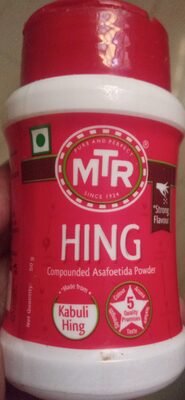
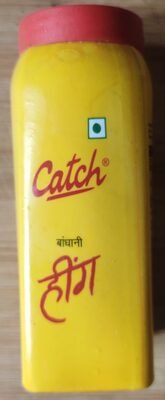
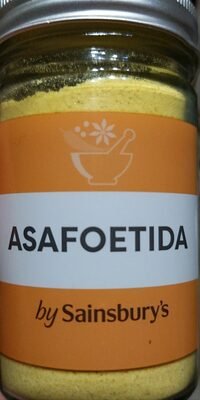
Photos and ingredient lists: Open Food Facts, a collaborative open-licence database, retrieved on 26 September 2026. Recipes change: the label on the packet in your hand is what counts.
The amount is small, but the wheat is there. A pinch of asafoetida in a big pot of dal adds little gluten per portion, and nobody can tell you how much. For someone with coeliac disease, a dish made with wheat-compounded asafoetida is not a gluten-free dish. In a restaurant, the only defence is to ask; at home, buy asafoetida labelled gluten free.
In a restaurant, the question is simple: “Do you use asafoetida, hing, in this dish? Is it mixed with wheat flour?” Many cooks don’t know their hing contains wheat, because it isn’t written in large letters. A vague answer counts as a no.
Pakoras, samosas, poppadoms: the oil question
Indian fried food has one thing in common with chips: the recipe can be wheat-free while the oil isn’t.
Pakoras and onion bhajis use a gram flour (besan) batter, which contains no gluten. Nothing stops a kitchen from adding another flour to the batter, hence the question; and above all, they may be fried alongside samosas, whose pastry is wheat. Poppadoms are usually lentil or rice flour; Coeliac UK reminds you to check they haven’t been fried in oil used for foods containing gluten.
The reasoning is the same as for chips: don’t ask “is it gluten free?” but “what oil is it fried in, and what else goes in there?”
What to order, and what to leave
Often wheat-free
Order, but check
- Plain basmati rice, biryani
- Dal, chana masala, vegetable curries, if no wheat-cut asafoetida
- Tandoori chicken or fish, if kept away from the naan
- Yoghurt, cream or coconut curries
- Dosa, idli, uttapam in a South Indian kitchen
- Raita, chutneys, lassi
Avoid unless the kitchen is dedicated
Wheat, or shared oil
- Naan, chapati, roti, paratha, kulcha, bhatura
- Samosas, kachoris and other fried pastries
- Pakoras and bhajis, unless the fryer is checked
- Poppadoms, unless the oil is checked
- Semolina halwa (sooji) or wheat vermicelli desserts
A note on desserts: kulfi and gulab jamun vary a lot between recipes (milk, flour, semolina), so ask about them like everything else. And the Indian beer served with the meal is barley beer; if you want a beer, it has to be one labelled gluten free.
For phrases to use with the kitchen, our coeliac restaurant card in several languages can be shown to the waiter; the core questions are in our guide to eating out with coeliac disease.
Fully gluten-free Indian restaurants
To be honest: we have very few. Out of more than 3,200 verified listings, fully gluten-free Indian restaurants can be counted on two hands, and none is in France, Spain, Italy or Germany so far. Those that exist show it can be done, and that South Indian cooking lends itself to it particularly well.
In Glasgow, two South Indian restaurants are entirely gluten free and, according to their listings, accredited by Coeliac UK: Dakhin (4.5★, nearly 1,300 reviews), which describes itself as Scotland’s first South Indian restaurant, with dosas, idlis and coastal curries, and Madurai (4.8★, nearly 1,000 reviews), built around rice and lentils.
In Warsaw, Rola Pao has removed wheat right down to its naan and tempura. In Portland, Oregon, the DesiPDX food truck (4.7★) serves poppadoms and Indian bowls from a dedicated kitchen.
Two listings show why we don’t mark everything as “100%”. In Lichfield, the The English Indian food truck (4.9★) advertises an entirely gluten-free menu, but we found no independent confirmation of how the kitchen is run: the listing carries an “unconfirmed claim” warning. In Kailua, Hawaii, Ganesh Dosa (4.7★) builds its menu around naturally gluten-free dosas, but reviews contradict each other on whether the kitchen is dedicated: we list it as a gluten-free menu, with a cross-contamination warning.
Do you know a gluten-free Indian restaurant we’re missing, near you or on your travels? Suggest it: it’s one of the categories where the Nutrixe map needs you most.
In short
- Rice, lentils, chickpeas, yoghurt: the Indian base is largely wheat-free, and sauces are often thickened without wheat flour.
- All the common breads (naan, chapati, paratha) are wheat, and the tandoor is shared.
- Powdered asafoetida is often more than 50% wheat flour: ask whether it’s in the dish.
- Pakoras, bhajis and poppadoms can be wheat-free but fried in the samosa oil.
- Fully gluten-free Indian restaurants are rare; Glasgow has two accredited by Coeliac UK.
This information does not replace medical advice. The compositions quoted come from labels checked in September 2026 and may change; every kitchen has its own recipes. If you are unsure what you tolerate, talk to your gastroenterologist.