Nutrixe
Modified starch is not gluten, but it can come from wheat. Everything depends on the plant: maize, potato and tapioca bring none, wheat does. And the modification, which is a treatment of the starch, changes nothing about its gluten content. On an EU label, wheat has to be named: that is the line to read.
What “modified” means
Starch is the energy store of seeds, roots and tubers. In its raw state it dissolves poorly and its uses are limited, so manufacturers treat it to improve how it thickens. That is modified starch. The word refers to a treatment of the starch, not to a genetic modification of the plant.
The European Food Safety Authority (EFSA) describes it in its 2017 re-evaluation: the starting starch comes from potatoes, from cereals such as maize, or from other sources such as tapioca, and then undergoes chemical modification. EU purity criteria even set separate limits for wheat and potato starches: wheat is one of the possible raw materials.
The Italian Coeliac Association (AIC) puts it plainly: “modified” refers to a chemical or physical process that does not change the gluten content. Wheat starch, modified or not, remains unsuitable for coeliacs unless it has been specially stripped of its gluten, the case we explain in our article on gluten-free wheat starch.
As for whether it is “dangerous”, EFSA concluded in 2017 that the twelve authorised modified starches raise no safety concern at the reported uses, for the general population. For someone with coeliac disease, the only question is origin.
The E14xx: twelve modified starches
In the European Union, twelve modified starches are authorised as additives, from E1404 to E1452:
| Number | Name |
|---|---|
| E1404 | Oxidised starch |
| E1410 | Monostarch phosphate |
| E1412 | Distarch phosphate |
| E1413 | Phosphated distarch phosphate |
| E1414 | Acetylated distarch phosphate |
| E1420 | Acetylated starch |
| E1422 | Acetylated distarch adipate |
| E1440 | Hydroxypropyl starch |
| E1442 | Hydroxypropyl distarch phosphate |
| E1450 | Starch sodium octenyl succinate |
| E1451 | Acetylated oxidised starch |
| E1452 | Starch aluminium octenyl succinate |
None of these numbers tells you which plant the starch comes from. And the manufacturer doesn’t even have to write it: for the category “modified starch”, the EU labelling regulation states that the specific name or E number is not required. Hence the lists that simply say “modified starch”, or “thickener (modified starch)”.
What the law says must be written
Regulation (EU) No 1169/2011 lists cereals containing gluten, “and products thereof”, among the allergens of its Annex II. It exempts only four: wheat-based glucose syrups (including dextrose), wheat-based maltodextrins, barley-based glucose syrups, and cereals used to make distilled spirits. Starch, modified or not, is not one of them.
All the shortcuts in naming, “starch”, “modified starch”, apply “without prejudice to Article 21”, the allergen article: a starch made from wheat must be accompanied by the word wheat, emphasised in bold, capitals or colour. Legally, then, a plain “modified starch” on an EU pack does not come from wheat, which is the principle our article on mayonnaise relies on.
Starch, flour and the American “modified food starch”
The EU regulation groups native starches, and starches modified by physical means or by enzymes, under a single name: “Starch”. In French, fécule and amidon are two words for the same thing, and a fécule with no origin can be wheat too, like the fécules (dont blé) in a crab stick we found for our article on sausages and ham. For cassava, see tapioca; for maize, cornstarch.
On American labels you will read “modified food starch”. In the United States, wheat is a major allergen that must be declared; barley and rye are not.
What the Nutrixe scanner does
The scanner doesn’t read the pack: it reads its transcription on Open Food Facts, entered by contributors. So it handles starch in three cases.
- The origin is harmless (maize, potato, tapioca, rice, pea…): the starch doesn’t weigh on the verdict.
- The origin is wheat (or barley, rye): “Contains gluten”.
- No origin at all: a plain “starch”, “modified starch” or an E14xx on its own. The scanner doesn’t assume that a missing origin is a harmless one. If nothing else decides, it answers “Check the pack”: the pack is where you will see whether wheat is written.
This third verdict only appears if nothing else has decided first: a gluten-free certification, a manufacturer’s gluten-free claim, a gluten cereal or a traces warning all take precedence.
Three products, three answers
These three products are sold in France.
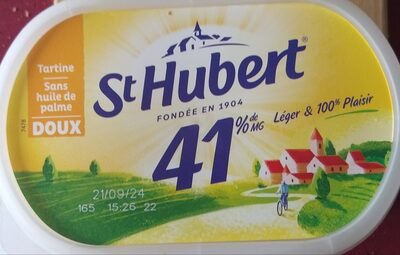
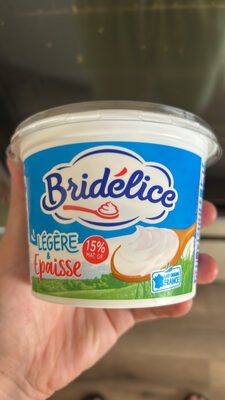
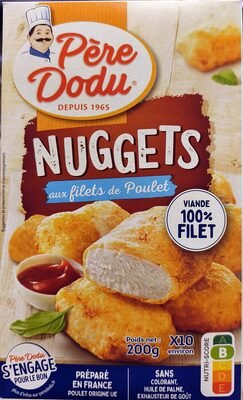
Same case as the St Hubert for Nestlé’s Petit Nesquik, whose list reads “modified starch” and then “starch”, with no plant: “Check the pack”.
Photos and ingredient lists: Open Food Facts, a collaborative open-licence database, retrieved on 16 November 2026. Recipes change: the label on the product in your hand is what counts.
What’s still at risk
- The factory. Maize or potato starch can be produced or used near wheat. The AIC only considers these starches safe when the product is labelled gluten free, and a traces warning is read as anywhere else: see “may contain” warnings.
- Labels from outside the EU. The named-wheat rule is European. On an imported product, the label follows the law of its own country.
- Gluten-free wheat starch. A certified product can contain wheat starch processed below 20 mg/kg: that is legal, and the choice is yours.
The table
| No particular risk | To check | Contains gluten |
|---|---|---|
| Modified maize, potato, tapioca, rice or pea starch | “Modified starch” with no origin | Wheat starch or modified wheat starch, with no gluten-free claim |
| Finished product labelled gluten free or certified | E1404 to E1452 on their own | Barley or rye starch |
| “Starch” on its own | ||
| Product imported from outside the EU |
In short
- “Modified” is a treatment of the starch: it neither removes nor adds gluten.
- Only the plant counts: maize, potato, tapioca, no; wheat, yes.
- In the EU, wheat starch must be labelled “wheat”, emphasised, even when modified.
- With no origin, the scanner answers “Check the pack”: the pack decides.
An E1422 among thirty ingredients? The Nutrixe scanner spots starches whose origin isn't stated, and shows you where to look. Discover the app.
For other ambiguous ingredients: maltodextrin and glucose syrup, natural flavourings, hydrolysed vegetable protein and how to read gluten-free labels.
Sources
- Regulation (EU) No 1169/2011, Annex II, point 1: cereals containing gluten “and products thereof”, with four exceptions (wheat-based glucose syrups and maltodextrins, barley-based glucose syrups, cereals for distillates); Article 21: allergen name emphasised; Annex VII, Part B, point 4: designation “Starch”; Part C: category “Modified starch”, for which the specific name or E number is not required. Consulted on 16 November 2026.
- Regulation (EU) No 1129/2011, Union list of food additives: E1404 to E1452 and their names. Consulted on 16 November 2026.
- EFSA, Re-evaluation of oxidised starch (E 1404), monostarch phosphate (E 1410)… and starch aluminium octenyl succinate (E 1452) as food additives, EFSA Journal, 2017; 15(10): e04911: starches from potatoes, cereals or other sources such as tapioca; separate purity criteria for wheat and potato starches; no safety concern at the reported uses, no numerical ADI needed.
- AIC, L’ABC della dieta del celiaco (in Italian): “modified” refers to a chemical or physical process that does not change the gluten content; wheat starch, modified or not, remains unsuitable unless de-glutenised; maize, potato and rice starches suitable when labelled “senza glutine”. Consulted on 16 November 2026.
- FDA, Food Allergies: the nine major food allergens under US law include wheat, but not barley or rye. Consulted on 16 November 2026.
- Open Food Facts, product entries 3366321054229 (St Hubert 41 unsalted), 3155251205425 (Bridélice, light crème fraîche), 3011250013549 (Père Dodu, nuggets) and 3023290007310 (Nestlé, Petit Nesquik), consulted on 16 November 2026.
This information is no substitute for medical advice. If you have coeliac disease, build your diet with your doctor or a dietitian, and a patient association such as Coeliac UK or, in the US, the Celiac Disease Foundation can support you.