Nutrixe
No, monosodium glutamate (MSG, E621) contains no gluten: it is the salt of an amino acid, at least 99% pure, and it is made today by fermentation. The two words look alike, and that is no coincidence, but the risk for someone with coeliac disease lies elsewhere: in wheat-based soy sauce, the flour that thickens a sauce, or the wheat protein in a stock cube, often listed right next to the MSG.
Glutamate and gluten: what’s the difference?
Gluten is a group of proteins found in wheat, barley and rye. Glutamate is a form of glutamic acid, an amino acid: just one of the building blocks that make up every protein, plant or animal. It also occurs in free form in tomatoes, cheese, cured ham and kombu seaweed.
The similar names come from history. According to a 2025 review in Nutrients, glutamic acid was discovered in 1866 by the German chemist Karl Heinrich Ritthausen, in wheat gluten. In 1908, the Japanese scientist Kikunae Ikeda identified it as the source of umami taste, and its sodium salt became the seasoning we know. The name kept the memory of wheat; the product did not.
What MSG is made of
The European Food Safety Authority (EFSA) re-evaluated the glutamates in 2017 and describes how they are made: first extracted from natural sources, then made by chemical synthesis, glutamate is now produced by fermentation. Bacteria fed on sugars and ammonia release glutamic acid, which is purified and then turned into its sodium salt. The process EFSA assessed uses plant-derived sucrose.
The finished product is very pure: Regulation (EU) No 231/2012, which sets the specifications for food additives, requires E621 to contain 99 to 101% monosodium glutamate. That leaves little room for anything else.
Coeliac Australia lists “glutamate based flavours 620-625 (wheat)” among the wheat-derived ingredients that are suitable for a gluten-free diet, alongside wheat glucose syrup. When the starting sugar comes from wheat, the gluten does not follow.
Other flavour enhancers
Regulation (EC) No 1333/2008 defines flavour enhancers as substances that enhance the existing taste or smell of a food. On labels you will see:
- E620 to E625: glutamic acid and its salts (sodium, potassium, calcium, ammonium, magnesium), re-evaluated together by EFSA;
- E627 and E631, disodium guanylate and inosinate, paired with MSG in many stock cubes, such as the Kania one below;
- yeast extract, found in the same products; our article on brewer’s yeast explains what to know about it.
Where the gluten really is
MSG travels with ingredients that can contain gluten:
- Soy sauce. Classic soy sauce is brewed with wheat. Tamari contains little or none, but only a “gluten free” label settles it: see soy sauce and tamari.
- Thickened sauces. Oyster sauce, hoisin and wok sauces are often thickened with wheat flour, like the Jia sauce below.
- Hydrolysed vegetable protein. It gives stock cubes a meaty taste; on French labels it often appears as “extrait végétal aminé (blé)”. Maggi’s Kub Or is one example, covered in our article on stock cubes, sauces and condiments, and a separate article is devoted to it.
- Flavourings. A flavouring can have a cereal carrier or origin, which must be declared if it is wheat or barley: see natural flavourings.
Three products, and what the scanner says
These three products are sold in France.
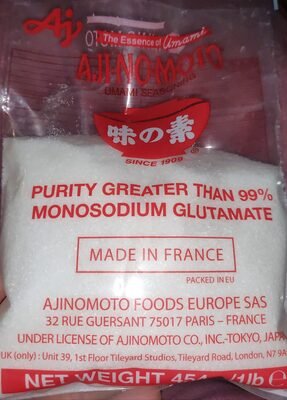
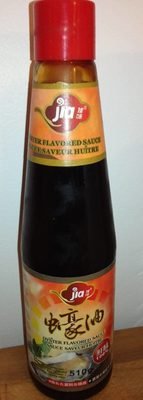

Three products with MSG, three answers: what decides is the flour and the traces line, never the E621.
Photos and ingredient lists: Open Food Facts, a collaborative open-licence database, retrieved on 16 November 2026. Recipes change: the label on the product in your hand is what counts.
What the Nutrixe scanner does
The scanner does not mix up the two words. “Glutamate”, “E621”, “glutammato” or “Glutamat” trigger no warning: wheat, barley, rye, malt and their equivalents in six languages do, as do traces warnings. That is why a bag of pure MSG and an oyster sauce, with the same flavour enhancer, get different verdicts.
At a Chinese or Asian restaurant
Many menus advertise “no MSG”. That tells you about the flavour enhancer, not about gluten: a dish without MSG can still be coated in wheat-based soy sauce. The real questions are about soy sauce (tamari or not), thickened sauces, batter and shared frying oil. Our guide to eating gluten free at Chinese restaurants goes through them dish by dish.
The table
| No particular risk | To check | Contains gluten |
|---|---|---|
| Monosodium glutamate (E621) and other glutamates (E620 to E625) | Stock cubes and sauces: read the whole list, traces included | Soy sauce brewed with wheat |
| Pure MSG, in a bag | “No MSG” dishes in restaurants | Sauces thickened with wheat flour (oyster, hoisin…) |
| Yeast extract, flavourings with no stated origin | Hydrolysed wheat protein |
In short
- Glutamate is an amino acid, not a protein: E621 is at least 99% pure.
- It is made by fermenting sugars; even when wheat-derived, Coeliac Australia considers it suitable.
- The resemblance to “gluten” goes back to 1866, when glutamic acid was found in wheat gluten.
- The gluten in a stock cube or sauce sits next to it: soy sauce, flour, wheat protein, traces.
MSG and wheat flour in the same list? The Nutrixe scanner doesn't stop at a word that looks like “gluten”: it looks for the cereal and shows you where it is. Discover the app.
Read on: caramel colour E150, maltodextrin and glucose syrup, modified starch and “may contain” warnings.
Sources
- EFSA, Re-evaluation of glutamic acid (E 620), sodium glutamate (E 621), potassium glutamate (E 622), calcium glutamate (E 623), ammonium glutamate (E 624) and magnesium glutamate (E 625) as food additives, EFSA Journal, 2017; 15(7): e04910: production by bacterial fermentation of sugars (sucrose in the process assessed), after extraction and then chemical synthesis in the past.
- Regulation (EU) No 231/2012, Annex, E 621: content of 99.0 to 101.0% monosodium glutamate (original text of the Annex, read on 16 November 2026).
- Regulation (EC) No 1333/2008, Annex I: definition of flavour enhancers.
- Regulation (EU) No 1169/2011, Annex II: cereals containing gluten must be emphasised in the ingredients list.
- Coeliac Australia, Gluten free diet: getting started, May 2023, page 6: “glutamate based flavours 620-625 (wheat)” among the wheat-derived ingredients suitable for a gluten-free diet. Accessed on 16 November 2026.
- Matsumoto H. et al., The Role of L-Glutamate as an Umami Substance for the Reduction of Salt Consumption: Lessons from Clinical Trials, Nutrients, 2025; 17(10): 1684: glutamic acid discovered in wheat gluten by Ritthausen in 1866, umami identified by Ikeda in 1908, free glutamate in tomatoes, cheese, cured ham and kelp.
- Open Food Facts, product entries 3700417300027 (Ajinomoto, monosodium glutamate), 3379140183636 (Jia, oyster flavoured sauce) and 4056489168096 (Kania, vegetable stock), consulted on 16 November 2026.
This information is no substitute for medical advice. If you have coeliac disease, build your diet with your doctor or a dietitian; a patient association such as Coeliac UK or, in the US, the Celiac Disease Foundation can help.