Nutrixe
You turn over a packet of “gluten-free” bread and read, in the ingredient list: wheat starch. It is neither a misprint nor a con. It is one of the most confusing cases in European labelling, and one we are most often asked to explain. Here is what the law says, what it guarantees, and what you decide next.
What the regulation says
In Europe, the “gluten-free” claim is governed by Commission Implementing Regulation (EU) No 828/2014, in force since July 2016. It does not reason in ingredients but in final content: a food may be called “gluten-free” if, as sold, it contains less than 20 mg of gluten per kilo, the famous 20 ppm. The regulation takes that threshold from the Codex Alimentarius, the international reference.
And it says so explicitly: the threshold also applies to foods made from wheat, barley or rye specially processed to remove gluten. “Gluten-free” wheat starch is in that category. It has been washed with water, repeatedly, until the proteins, gluten among them, are removed to a residual level, measured by analysis.
The same regulation provides a second claim, “very low gluten”, for products between 20 and 100 ppm. It is rare on shelves, and not suitable for people with celiac disease. The United States allows wheat starch in “gluten-free” products under the same 20 ppm condition since the FDA rule of 2013.
What the label must show
Two rules combine, and that is what makes it confusing:
- Wheat remains an allergen to declare. Regulation 1169/2011 on consumer information requires allergens to be emphasised in the ingredient list. So “wheat starch”, in bold, capitals or underlined, always appears, even when the starch is gluten-free.
- The “gluten-free” claim covers the finished product. It says the whole is below 20 ppm, starch included.
A product bearing both, “wheat starch” in the list AND “gluten-free” on the packaging, is therefore compliant, and under 20 ppm. A product showing “wheat starch” without the “gluten-free” claim is an ordinary wheat product: leave it.
Worth knowing: the Crossed Grain logo, issued by European patient associations (AOECS), may also appear on a wheat starch product, because its standard keeps the same 20 ppm threshold. The logo does not mean “no trace of wheat”; it means “controlled under 20 ppm”.
Three real products, label in hand
This is no textbook case. On Open Food Facts, the collaborative food database, there are dozens of references sold in France that combine the “gluten-free” claim and wheat starch, almost all breads, pastries and waffles. Three examples from a brand every gluten-free aisle knows:
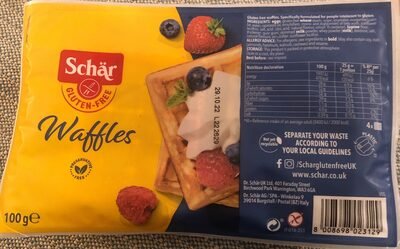
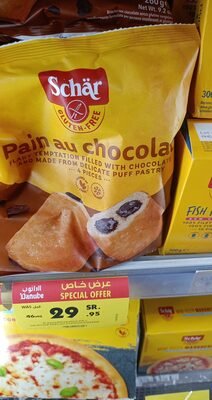
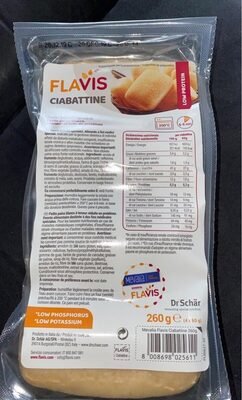
On all three packs, the “gluten-free” claim is legally accurate: these products are tested under 20 ppm. And on all three, wheat is duly declared as an allergen, in capitals or bold. The two rules sit side by side on the same packet; that is exactly the situation that confuses people.
Photos and ingredient lists: Open Food Facts, a collaborative open-licence database, retrieved on 5 September 2026. Recipes change: the label on the packet in your hand is what counts.
What it guarantees, and what it does not
What it guarantees: a measured gluten content, below 20 ppm, considered safe for the vast majority of people with celiac disease by health authorities and patient associations. The 20 ppm threshold was set from clinical studies on what a celiac gut tolerates without damage, in normal daily consumption.
What it does not guarantee: zero. 20 ppm is not 0 ppm. A person with celiac disease who eats large amounts of products all close to the threshold, which is possible with bread morning, noon and night, accumulates. And a small minority of people react below 20 ppm: rare, but documented.
That is why the question remains debated. Australia and New Zealand do not allow wheat starch in “gluten-free” products: their standard requires no detectable gluten. Some people with celiac disease in Europe choose to avoid it on principle, without this being a medical recommendation.
Why the Nutrixe scanner flags it anyway
When you scan one of the three products above, Nutrixe does not show you a reassuring verdict. It flags wheat starch as an ingredient containing gluten, “gluten-free” claim or not. That is a deliberate stance, and we stand by it.
The reason is simple: 20 ppm is not zero, and wheat is still wheat. The regulation sets a tolerance threshold; it does not say the product is free of gluten. A person with celiac disease who eats this bread morning, noon and night accumulates traces under the threshold, and a minority reacts below 20 ppm. Nutrixe cannot know which case you are in. So the scanner shows you the ingredient, tells you why it matters, and lets you decide, rather than deciding for you with a “gluten-free ✅” you could not have questioned.
It is the same logic as for oats: what is allowed is not necessarily what suits you, and the only honest answer is to show you what the decision rests on.
What you decide
There is no universal right answer, but there is a clean way to decide:
- If you have celiac disease and are well controlled (normalised serology, no symptoms), “gluten-free” products with wheat starch are, according to available data, compatible with your diet. Many good European breads contain it, and it is often thanks to it that they have a decent crumb.
- If you react despite a strict diet, or if your serology does not normalise, wheat starch is one of the first things to examine with your doctor or dietitian: removing it for a few weeks is a simple test.
- If you prefer to avoid it, that is a legitimate choice, and it reads in a second: the word “wheat” in bold in the ingredient list is enough to settle it.
What this article does not say, because nobody can say it for you: what is good for you. The only certainty is that “gluten-free” and “wheat-free” are not synonyms, and it pays to know it before being surprised.
In short
- “Gluten-free” in Europe = under 20 ppm in the finished product, whatever the origin of the ingredients (Regulation 828/2014).
- Wheat starch may therefore appear if it has been processed and controlled; wheat stays declared in bold as an allergen.
- The same product without the “gluten-free” claim is an ordinary wheat product.
- Common products contain it: Schär waffles, pain au chocolat, bread rolls, among others.
- Compatible with the diet of most people with celiac disease according to the authorities; some avoid it, some countries ban it. Nutrixe flags it so the choice is yours.
Scan the packet. The Nutrixe scanner reads the ingredient list and flags wheat starch when it finds it, with or without a "gluten-free" claim: it shows you what the decision rests on, and leaves it to you. Discover the app.