Nutrixe
On the shelf, everything says “gluten-free”. But turn three bottles over, and two of them list barley malt. That is not a mistake: it is the second family of “gluten-free” beers, the treated one. This article gives the brands of both families; our background article on gluten-free versus gluten-removed beer explains why the difference matters.
Three bottles sold in Europe
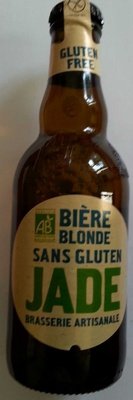
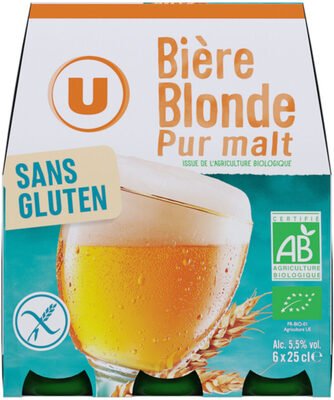
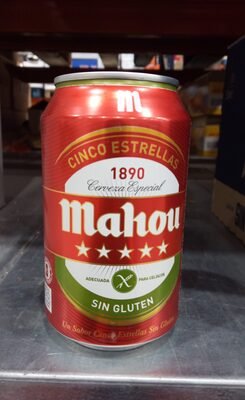
Photos and ingredient lists: Open Food Facts, a collaborative open-licence database, retrieved on 5 September 2026. Recipes change: the label on the bottle in your hand is what counts.
All three are compliant: under 20 ppm, regulated claim. And all three contain barley, whose gluten has been broken down by an enzyme into smaller fragments. The unresolved question is whether those fragments are harmless to every person with celiac disease, and whether the standard test measures them correctly. Several patient associations recommend caution; some people tolerate them, others do not.
Family 1: brewed without any gluten cereal
These beers never contained barley or wheat. They are brewed from millet, sorghum, buckwheat, rice, corn or quinoa, and need no treatment. For a person with celiac disease, they do not raise the measurement question.
- Glutenberg (Quebec): the North American reference, an entirely dedicated brewery: blonde, red, IPA, white, from millet, buckwheat, corn and quinoa. Distributed in Europe.
- Green’s (UK): a pioneer, brewed in Belgium from millet, buckwheat, rice and sorghum.
- Ghostfish and Holidaily (USA): entirely dedicated breweries, widely distributed across the Atlantic.
- Mongozo Buckwheat White (Belgium): a buckwheat white beer.
- Bard’s (USA): sorghum.
- Ground Breaker (Portland, Oregon): entirely gluten-free brewery and restaurant.
- Elsewhere in Europe, the naturally gluten-free offer is craft and local; it is recognised by the ingredient list, millet, buckwheat, rice, quinoa, and by the absence of any barley. It changes fast: ask your bottle shop, and read.
Family 2: gluten-removed barley beers
Brewed with barley, then treated with an enzyme that fragments the gluten. Compliant with 20 ppm on the standard test. They taste like ordinary beer, because that is what they are.
- Jade (Brasserie Castelain, France): the most widespread in French supermarkets.
- Estrella Damm Daura (Spain): the pioneer of the process, multi-award-winning.
- Mahou Cinco Estrellas Sin Gluten, San Miguel Sin Gluten, Ambar Sin Gluten (Spain).
- Peroni Senza Glutine (Italy).
- Brunehaut (Belgium): organic range.
- Stella Artois Gluten Free (Belgium).
- Omission (USA).
- Supermarket own-brand “gluten-free” beers: gluten-removed, generally.
The word to look for on the label: barley. If it is there, the beer is in this family, whatever the logo.
What Nutrixe listings say
The “beer” flag is one of the risks we record establishment by establishment, and it is frequent: 63 listings carry it. The typical case is not the bar serving the wrong beer; it is the entirely gluten-free restaurant whose bar is not. TacoVino, in Oregon, says it itself: “Our kitchen is 100% gluten free (except for the beer!)”. Chaia in Washington, Boss Chick N Beer in Ohio, Mexi & Co in Sherbrooke: dedicated kitchens, ordinary beers at the bar. They are good, honest establishments, and that is why the listing says so rather than keeping quiet.
In practice
- Read the list: barley → gluten-removed; millet, sorghum, buckwheat, rice → naturally gluten-free.
- If you tolerate gluten-removed beers poorly, or would rather not test, family 1 settles the question.
- In a restaurant, a 100% gluten-free kitchen says nothing about the bar: ask, or look at the flag on the listing.
- Cider, wine and distilled spirits contain no gluten; neither does whisky, which surprises people.
Scan the bottle. The Nutrixe scanner reads a beer's ingredient list: if barley is there, you will see it, and you will know which family it belongs to. Discover the app.