Nutrixe
Yes, Leclerc, the French supermarket chain, has its own gluten-free range, Chaque Jour Sans Gluten, under its Marque Repère own brand: pasta, corn couscous, breads, flour, pizza and pastry dough, cakes and biscuits. Of the 47 products from the range we checked, our scanner shows 15 as “Certified gluten-free”, 30 as “Labelled gluten-free” and 2 as “May contain traces of gluten”, both made with oats. What this gap really reflects is often the state of the product record rather than the pack: several “Labelled” packs show the Crossed Grain symbol in their photo. Here, aisle by aisle, is what you will find and what the label says.
How we did this. On 16 November 2026 we read the Open Food Facts records for the Chaque Jour Sans Gluten brand (56 records), kept the 49 that carry a Leclerc barcode and had been updated since 2025, and ran each one through our scanner's engine. Two were set aside: a bread whose record ticks the gluten allergen by mistake, and fish fingers whose rice breadcrumbs are read, as a precaution, as wheat breadcrumbs. That leaves 47. We cross-checked them against the online list on the e.leclerc website, which showed 29 of them that day. This is not the full range of your store: products vary from one store and one click-and-collect point to another, Open Food Facts is filled in by contributors, and recipes change.
The Chaque Jour Sans Gluten range
The products are easy to spot: dark grey packaging and the title “Chaque Jour Sans Gluten” in orange letters, under the Marque Repère logo (Marque Repère is Leclerc’s own brand). On the pasta, couscous, sliced bread and pizza packs we looked at, the Crossed Grain symbol (called épi barré in France) is printed in a corner, with, when the photo is sharp enough, a licence number starting “FR-077-”. It is the symbol that AFDIAG, the French coeliac society, grants after testing each product (under 20 mg/kg of gluten) and auditing the factory, both renewed every year.
Our scanner does not read the pack: it reads the Open Food Facts record. When a contributor has entered the symbol, it shows “Certified gluten-free”. When the record only shows the “gluten free” claim, it shows “Labelled gluten-free”. That is the case for the 400 g pasta bags shown on the e.leclerc website, while the 500 g boxes, which the website does not show, have the symbol entered. Both verdicts agree on one point: the words “gluten free” commit the manufacturer to under 20 mg/kg, under Regulation (EU) No 828/2014. The Crossed Grain symbol adds an outside check; we explain the difference in our article on the Crossed Grain symbol.
The e.leclerc website mixes up its aisles. On 16 November 2026, its “Nos produits Chaque Jour sans Gluten” page also showed twelve P’tit Déli products, another Leclerc brand: madeleines, pound cakes and a cake bar. The record for the 500 g madeleines lists “farine de blé 34 %” (wheat flour, 34%) as the first ingredient. Whether you order online or shop in store, trust the words “sans gluten” on the pack, not the way a web page is sorted.
Pasta, couscous and gnocchi
This is the best-stocked aisle: four shapes of dried pasta made from maize and rice flour, egg tagliatelle, potato gnocchi and a 100% maize couscous, the range’s only gluten-free “semolina”.
| Product | What matters on the label | Scanner verdict |
|---|---|---|
| Spaghetti, coquillettes (small macaroni), fusilli, penne (400 g) | White and yellow maize, rice, emulsifier. May contain lupin and soy. Crossed Grain symbol in the photos, not in the records | Labelled gluten-free |
| Spaghetti, penne, coquillettes (500 g) | Maize 79.6%, rice 19.9%. Crossed Grain symbol recorded | Certified gluten-free |
| Tagliatelle (250 g, two records) | Maize starch, eggs, maize, rice | Certified gluten-free |
| Corn couscous (375 g) | 100% maize flour. Crossed Grain symbol in the photo | Labelled gluten-free |
| Gnocchi (400 g) | Potatoes, lactose, milk proteins | Certified gluten-free |
| Ricotta and spinach ravioli (200 g) | Ricotta, rice flour, eggs | Certified gluten-free |
Of 12 products checked, 7 are “Certified gluten-free” and 5 “Labelled gluten-free”. The e.leclerc website shows the four 400 g pastas, the tagliatelle and the couscous; the 500 g boxes, the gnocchi and the ravioli were not there on 16 November 2026.
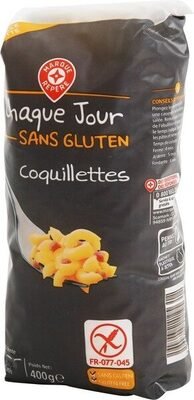
On 16 November 2026 the e.leclerc website priced these 400 g bags between €1.59 and €1.71, around €4 per kilo; prices vary from store to store. For Leclerc’s competitors, see our page on gluten-free products at Auchan.
Bread
Chaque Jour Sans Gluten bread is packaged, like that of the specialist brands: sliced sandwich bread (pain de mie), multigrain bread, small part-baked baguettes, crispbreads. The breads are made from starches (maize, cassava, potato) and rice flour, held together by psyllium and thickeners, often with egg white.
| Product | What matters on the label | Scanner verdict |
|---|---|---|
| Sliced bread (300 g) | Maize starch, maize flour, starches, egg white. May contain nuts. Crossed Grain symbol in the photo | Labelled gluten-free |
| Plain sliced bread (350 g) | Maize starch and flour, starches. Crossed Grain symbol recorded | Certified gluten-free |
| Small baguettes (150 g) | Rice sourdough, maize starch, rice flour, egg white | Certified gluten-free |
| Multigrain bread (300 g) | Rice sourdough, flax, buckwheat and chia seeds | Labelled gluten-free |
| Crispbreads (250 g) | Maize semolina 57%, rice flour 40% | Labelled gluten-free |
| Buckwheat galettes (× 4), mini blinis, mini breadsticks | Blé noir flour; rice flours; rice flour and maize starch | Labelled gluten-free |
Of 8 products checked, 2 are “Certified gluten-free” and 6 “Labelled gluten-free”. The blé noir (“black wheat”) in the galettes is buckwheat, a plant unrelated to wheat; we explain why in our article on buckwheat.

The 400 g pain campagnard (country-style loaf) shown on the e.leclerc website is not in this table: its Open Food Facts record ticks the “gluten” allergen, although its ingredient list contains none and the symbol is recorded. Our scanner goes by the allergen and shows “Contains gluten”. It is a record error that anyone can fix on Open Food Facts; until then, the pack is what counts. To choose between packaged bread, a dedicated bakery and an ordinary bakery, see which gluten-free bread to choose.
Flour and baking mixes
The range has no single flour (rice, buckwheat or maize on its own) but blends: a 1 kg “Mix tous usages” (all-purpose mix) for sweet and savoury recipes, and cake mixes.
| Product | What matters on the label | Scanner verdict |
|---|---|---|
| All-purpose mix (1 kg) | Rice flour 46.9%, potato starch 27.3%, maize starch 24.4%, psyllium. May contain egg | Labelled gluten-free |
| Bread and pastry mix (1.016 kg) | Maize starch, dextrose, buckwheat flour, guar gum, carob; separate yeast sachet | Labelled gluten-free |
| Chocolate fondant cake mix (500 g) | Sugar, eggs, chocolate, rice flour, potato starch | Labelled gluten-free |
| Lemon sponge cake mix (500 g) | Sugar, eggs, rice flour, potato starch | Labelled gluten-free |
All 4 products are “Labelled gluten-free”. The front of the all-purpose mix bag shows a crossed-grain pictogram, with no licence number visible in the photo: we cannot say whether it is AFDIAG’s symbol. The e.leclerc website priced it at €4.65 per kilo on 16 November 2026. The role of psyllium and guar gum in these blends is explained in our article on gums and psyllium.
Pizza and pastry dough
| Product | What matters on the label | Scanner verdict |
|---|---|---|
| Ready-rolled pizza dough (260 g) | Maize starch, rice flour, pea flour, millet flour | Labelled gluten-free |
| Shortcrust pastry (230 g), puff pastry (280 g) | Maize starch, rice flour, pea flour, a little buckwheat | Labelled gluten-free |
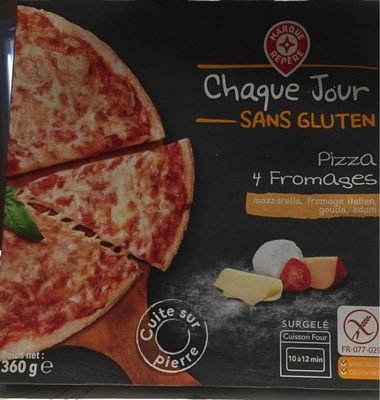
| Frozen four-cheese pizza (360 g) | Rice flour and starch, mozzarella, grana padano, gouda, edam. Crossed Grain symbol recorded | Certified gluten-free |
| Frozen ham and cheese pizza (360 g) | Rice flour, mozzarella, cooked ham | Labelled gluten-free |
Of 5 products, 1 is “Certified gluten-free” and 4 “Labelled gluten-free”. The three ready-rolled doughs are on the e.leclerc website; the two frozen pizzas were not there on 16 November 2026.
Cakes, biscuits, snacks and breakfast
| Product | Scanner verdict |
|---|---|
| Soft shell-shaped cakes, chocolate chip cakes, dark-chocolate-coated shortbread, raspberry shortbread, vanilla crêpes | Certified gluten-free (5) |
| Cookies, petit beurre biscuits, vanilla wafers, milk chocolate sticks, mini brownies, strawberry- and chocolate-filled cakes | Labelled gluten-free (7) |
| Savoury tuiles (crisps): plain, sour cream and onion, paprika | Labelled gluten-free (3) |
| Cocoa-hazelnut filled cereal | Labelled gluten-free |
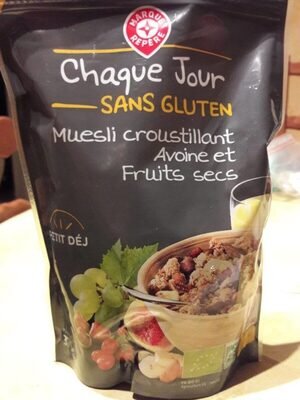
| Crunchy oat and dried fruit muesli, oat cereal bars | May contain traces of gluten (2) |
The biscuits are made from maize flour, rice flour and starches. Many warn of possible traces of nuts, egg or milk, worth reading if you have other allergies.
The two oat products are the only ones the scanner puts in the traces category. This is not a mistake: their oats are described as “gluten free”, but the record shows no symbol from an independent body, and oats are the cereal most often contaminated with wheat. A small minority of people with coeliac disease also react to oats themselves, even pure ones. We explain this in our article on oats.
Photos and ingredient lists: Open Food Facts, a collaborative database under an open licence, checked on 16 November 2026. Recipes change: the label on the product in your hand is what counts.
The other brands in the aisle
Alongside the own brand, Leclerc stores sell the specialist brands found everywhere: Schär (breads, wraps, biscuits, flours), Gerblé, Bjorg, Aglina, Ma Vie Sans Gluten. Their presence varies far more from store to store than that of Chaque Jour Sans Gluten, and Open Food Facts only links them to Leclerc when a contributor has noted it. We do not cover them here, with one exception: beer.
Open Food Facts links two “gluten-free” beers from Leclerc’s organic brand, Bio Village (Marque Repère), to Leclerc: a lager in 6 × 25 cl and a 5.5% beer in 75 cl. Their ingredient list is the same: water, barley malt, wheat malt, hops, coriander. These are beers brewed from gluten-containing cereals and treated to reduce their gluten content, known as “gluten-removed” beers: Regulation (EU) No 828/2014 allows them to say “gluten free” if they stay under 20 mg/kg. Yet their records declare gluten among the allergens, and our scanner, which puts a declared allergen ahead of the claim, shows “Contains gluten”. We explain the difference between these beers and those brewed without barley in our article on gluten-removed beer, and the brands in our guide to gluten-free beers.
The table
| Gluten free | Check | Contains gluten |
|---|---|---|
| Range products with the Crossed Grain symbol (pasta, couscous, breads, four-cheese pizza, cakes); products labelled “sans gluten”, which often show the symbol on the pack even when the record misses it | Oat muesli and bars (“May contain traces of gluten”); gluten-removed Bio Village beers, made with barley and wheat (“Contains gluten” on the scanner); any product on the website’s gluten-free page without the claim on the pack | P’tit Déli madeleines and pound cakes shown on the website’s gluten-free page |
For organic shops, see also gluten free at Naturalia.
In short
- Leclerc has an own-brand range, Chaque Jour Sans Gluten (Marque Repère): 29 products on its website on 16 November 2026, 47 checked on Open Food Facts.
- Our scanner shows 15 certified, 30 labelled, 2 with possible traces (both with oats).
- Several “labelled” products carry the Crossed Grain symbol on the pack: the record lags behind the packaging.
- For flour, the range sells an all-purpose blend, not a single flour.
- The gluten-free page of the e.leclerc website also shows wheat madeleines from another brand: read the pack.
Holding a product from the range? The scanner in the Nutrixe app finds its record and tells you where its answer comes from: a certified symbol, the manufacturer's claim, or the ingredient list alone. Free, no account needed.
See also
- Gluten free at Carrefour in France
- Aldi and Lidl gluten free, country by country
- Reading gluten-free labels
- Gluten free on a budget
Sources
- E.Leclerc, Nos produits Chaque Jour sans Gluten, e.leclerc, accessed 16 November 2026: 29 Chaque Jour Sans Gluten products and 12 P’tit Déli products on the same page.
- E.Leclerc, product pages Coquillettes sans gluten 400 g, Farine multi usages sans gluten 1 kg and Madeleines 500 g P’tit Déli, accessed 16 November 2026: ingredients and prices shown; availability depends on the store.
- AFDIAG, Logo « épi barré » (in French), accessed 16 November 2026: each product tested by an independent laboratory (under 20 mg/kg), factory audited to the AOECS standard, both renewed every year.
- AFDIAG, Tout savoir sur le gluten (in French), accessed 16 November 2026: choose certified products; certified oats only.
- Commission Implementing Regulation (EU) No 828/2014: the “gluten free” claim limited to 20 mg/kg in the food as sold.
- Regulation (EU) No 1169/2011, Annex II: cereals containing gluten (wheat, rye, barley, oats) to be declared as allergens.
- Open Food Facts, records 3564706514195 (coquillettes 400 g), 3564706510005 (sliced bread 300 g), 3564700868645 (four-cheese pizza), 3564706514249 (oat muesli), 3564700651292 (spaghetti 500 g), 3564706695825 (all-purpose mix), 3564700886274 (corn couscous), 3564700653593 (country-style loaf), 3564707128124 and 3564706579538 (Bio Village beers), accessed 16 November 2026; the whole brand on the Chaque Jour Sans Gluten page on Open Food Facts.
This information is no substitute for medical advice. If you have coeliac disease, your doctor, your dietitian or a patient association such as Coeliac UK can help you plan your shopping, especially when it comes to oats.