 Nutrixe
Yes, plain popcorn is gluten free: it’s popped maize, with oil and salt or sugar. But a packet of flavoured popcorn can contain wheat breadcrumbs in its seasoning, pieces of pretzel or a gluten traces warning: the question is settled packet by packet.
Why popping corn has no gluten
Popcorn is a variety of maize whose kernel bursts when heated, under the pressure of the water inside it. And maize doesn’t contain the gluten that causes problems for coeliacs, the gluten in wheat, barley and rye. Its main protein, zein, doesn’t trigger the coeliac reaction; we explain this in our article on corn. Coeliac UK, for its part, lists corn, popcorn included, among the gluten-free wholegrains.
The kernels, oil, salt and sugar contain none. Everything depends on what’s added.
What’s still at risk
Seasonings
Flavoured savoury popcorn (barbecue, cheese, spices) relies on a “seasoning base” that can contain wheat breadcrumbs, flour or barley malt extract. It’s the same mechanism as for flavoured crisps.
Mixes
Popcorn and pretzels, popcorn and biscuits, chocolate-coated popcorn: each addition is one more ingredient to read. Werther’s Original caramel popcorn, for example, contains pretzels made with wheat flour. The chocolate itself can contain malt extract.
Caramel made with wheat syrup
A lot of caramel popcorn is made with wheat glucose-fructose syrup. This syrup is exempt from allergen labelling under European rules, because its manufacture removes the proteins; we go into this exemption in our article on glucose syrup and maltodextrin. The Nutrixe scanner flags it, as a precaution, when the word “wheat” is spelled out: with this explanation, the decision is yours.
Traces
Some popping corn and ready-made popcorn carry a “may contain traces of gluten” warning. Saint Eloi popping corn, sold in France, states it on its 500 g bag, for example. AFDIAG, the French coeliac association, advises avoiding these products when in doubt.
At the cinema and the funfair
Popcorn sold over the counter isn’t prepacked. In France, since Decree No. 2015-447 of 17 April 2015, such food must come with written allergen information, without the customer having to ask. Ask for it wherever you are: it will tell you what’s in the recipe, not necessarily what’s lying around on the counter, the scoops and the neighbouring machines (pretzels, churros, waffles).
Three packets, three answers
These three products are sold in France.
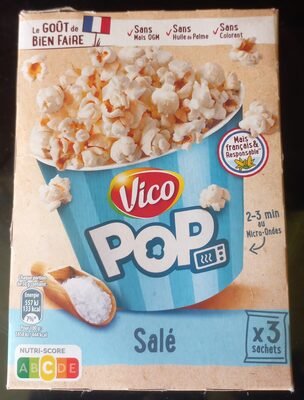
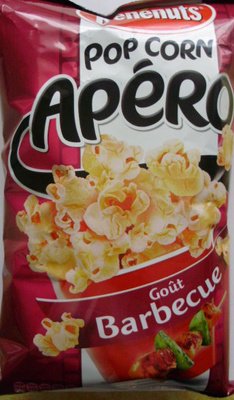
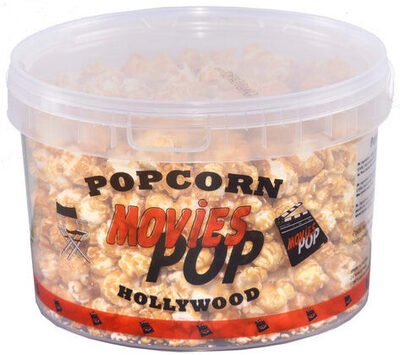
Photos and ingredient lists: Open Food Facts, a collaborative open-licence database, retrieved on 8 October 2026. Recipes change: the label on the packet in your hand is what counts.
The table
| No particular risk | To check | Often contains gluten |
|---|---|---|
| Plain popping corn with no traces warning | Ready-made sweet or salted popcorn | Popcorn with a breadcrumb or malt seasoning |
| Popcorn labelled “gluten free” | Microwave popcorn (flavouring, traces) | Popcorn mixed with pretzels or biscuits |
| Homemade popcorn, with oil and salt | Caramel popcorn (exempt wheat syrup, traces) | Kernels or popcorn with a “traces of gluten” warning (avoid) |
| Cinema or funfair popcorn |
How to choose
- Read the ingredients list: wheat, barley, rye, malt and breadcrumbs are emphasised in it, as required by Regulation (EU) No 1169/2011.
- Read the traces line. A gluten traces warning rules the packet out. See our article on “may contain” warnings.
- Go homemade: plain kernels in a saucepan, with oil and salt, is the easiest popcorn to check.
- At the counter, ask for the written allergen information, and think about shared scoops and bins, as with any cross-contamination.
In short
- Popping corn contains no gluten; nor does plain popcorn.
- Gluten gets in through seasonings (breadcrumbs, malt), mixes (pretzels, biscuits) and factory traces.
- The wheat glucose syrup in caramel is exempt from allergen labelling and considered safe by patient associations.
- At the cinema, allergen information must be available: ask for it.
In the snacks aisle? Scan the barcode: the Nutrixe scanner reads the ingredients list and spots breadcrumbs or malt in a seasoning, as well as trace warnings. Discover the app.
Sources
- Regulation (EU) No 1169/2011 on the provision of food information to consumers, Annex II: cereals containing gluten are allergens that must be emphasised, with the exception, among others, of wheat-based glucose syrups, including dextrose.
- Décret n° 2015-447 du 17 avril 2015 relatif à l’information des consommateurs sur les allergènes et les denrées alimentaires non préemballées (Journal officiel, 19 April 2015): the French decree on allergen information for unpackaged food.
- AFDIAG, Lors de vos achats en magasin, afdiag.fr: advice to avoid products with a “may contain traces of…” warning.
- Coeliac UK, Fibre on a gluten free diet, coeliac.org.uk: corn, popcorn included, among the gluten-free wholegrains.
- Open Food Facts, product entries 3336972302079 (Vico Pop corn salé), 3168930006862 (Bénénuts Pop Corn Apéro barbecue), 3760018850581 (Movies Pop Popcorn caramel), 4014400925326 (Werther’s Original Caramel popcorn) and 3250392271831 (Saint Eloi Maïs pop corn), consulted on 8 October 2026.
This information is no substitute for medical advice. How strict you need to be depends on your situation: if you have coeliac disease, talk to your doctor or to a patient association such as Coeliac UK or, in the US, the Celiac Disease Foundation.


