Nutrixe
No, Nutella spread doesn’t contain gluten: its recipe has no cereal, Ferrero declares it gluten free and the jar sold in France says so below the ingredients list. On the other hand, Nutella Biscuits, Nutella B-ready and Nutella & Go do contain it. And for a coeliac person, the real risk isn’t in the jar: it’s on the knife.
What’s in the jar
Ferrero writes that the Nutella recipe is “the same, all over the world”. The lists recorded in France, Italy and the United States match: sugar, palm oil, hazelnuts, skimmed milk powder, fat-reduced cocoa, soya lecithin, vanillin. None of these raw materials comes from wheat, barley or rye, the three cereals whose gluten causes problems.
Nutella’s allergens lie elsewhere: milk, hazelnuts (a tree nut) and soya. A coeliac person can eat it; a person with a tree nut allergy can’t.
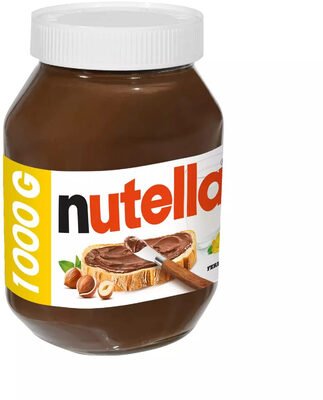
“Gluten free”, but not certified
The “gluten free” statement isn’t a free-form phrase. Commission Implementing Regulation (EU) No 828/2014 reserves it for products containing no more than 20 mg of gluten per kilo. By writing it on its jar, Ferrero commits to that threshold.
That doesn’t make it a certification, though: Open Food Facts records no gluten-free certification logo on the jar, neither the crossed grain nor an association logo (AFDIAG, AIC). The difference lies in the checks. A certification adds audits and testing by an outside body; a statement rests on the manufacturer. For most coeliacs, the statement is enough; some prefer certified products, and that’s a decision to make with your doctor.
What contains gluten
The Nutella name also covers biscuits and snacks. Ferrero states in its American FAQ that Nutella & Go, Nutella Biscuits and Nutella B-ready are not gluten free. The labels confirm it.
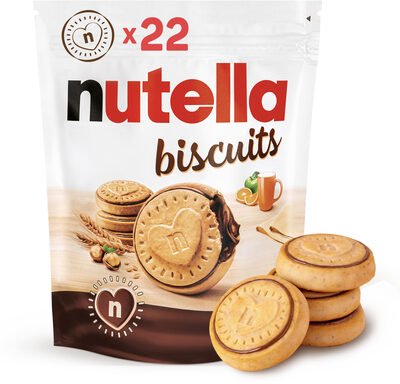
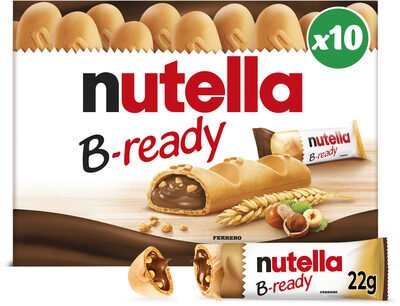
Nutella & Go pairs a pot of spread with breadsticks or pretzels, made from wheat. And the crêpes, waffles or pastries “with Nutella” sold on the street, in bakeries or in the chilled aisle are ordinary bakes, usually made with wheat flour: it’s the dough, not the filling, that contains the gluten.
Photos and ingredient lists: Open Food Facts, a collaborative open-licence database, retrieved on 17 October 2026. Recipes change: the label on the product in your hand is what counts.
The real trap: the shared jar
In a family where the rest of the household eats ordinary bread, the Nutella jar is one of the most exposed: a knife that has just touched a slice of toast goes in, and the crumbs stay in the spread. The jar was gluten free when you bought it; it no longer is by the third breakfast.
The fix is simple: a dedicated jar, marked, or a clean spoon every time. Our article on cross-contamination at home covers other habits of the same kind.
The table
| Gluten free | To check | Contains gluten |
|---|---|---|
| Nutella spread (unopened jar) | Opened jar, shared with slices of ordinary bread | Nutella Biscuits |
| Spreads from other brands | Nutella B-ready | |
| Nutella & Go (breadsticks, pretzels) | ||
| Crêpes, waffles, pastries “with Nutella” |
In short
- Nutella spread contains no gluten: no cereal in the recipe, and the jar carries the words “Sans gluten” (gluten free).
- That statement commits Ferrero to no more than 20 mg/kg, but it is not a certification.
- Nutella Biscuits, B-ready and Nutella & Go contain gluten (wheat flour, barley malt).
- For a coeliac, the main risk is the shared jar: a dedicated jar settles the question.
Not sure about another jar? The Nutrixe scanner reads the ingredients list and the traces warning, tells a certified logo apart from a simple manufacturer's statement, and never tells you “gluten free” without proof. Discover the app.
See also: sweets and chocolate by country, peanut butter, malt and how to read a label.
Sources
- Nutella United States, Spread FAQs, nutella.com: “Nutella spread is gluten free. Nutella & Go, Nutella Biscuits and Nutella B-Ready snacks are not gluten free.”; recipe “the same, all over the world” (consulted on 17 October 2026).
- Nutella Italy, Nutella product page, nutella.com: ingredients list followed by “Senza glutine” (consulted on 17 October 2026).
- Commission Implementing Regulation (EU) No 828/2014 of 30 July 2014: the “gluten-free” claim is reserved for foods containing no more than 20 mg/kg.
- Regulation (EU) No 1169/2011, Annex II: cereals containing gluten, milk, tree nuts and soya among the allergens that must be declared.
- Open Food Facts, product entries 3017620425035 (Nutella 1 kg), 8000500310427 (Nutella Biscuits) and 8000500217078 (Nutella B-ready), consulted on 17 October 2026.
This information is no substitute for medical advice. How strict you need to be depends on your situation: if you have coeliac disease, talk to your doctor or to a patient association such as Coeliac UK or, in the US, the Celiac Disease Foundation.