Nutrixe
Chia, flax, pumpkin, sunflower and sesame seeds have no gluten by nature. They are not gluten cereals, and Coeliac UK lists flax and sesame among suitable foods. But on the packets we looked at in France, a gluten traces warning comes up often, from Jardin Bio, Biocoop or Markal: the seed is safe, the factory not always.
Seeds, not cereals
Gluten comes from wheat, barley and rye. The seeds in this article come from plants unrelated to those cereals:
- Chia is the seed of a sage, Salvia hispanica: that’s the Latin name some manufacturers print on the list.
- Flaxseed (linseed), brown or golden, is sold whole, ground or as flour. Coeliac UK lists it among suitable foods and suggests adding it to muesli.
- Pumpkin and sunflower seeds are hulled seeds, for snacking or sprinkling.
- Sesame, which Coeliac UK also lists as suitable, is a major allergen in its own right: Regulation (EU) No 1169/2011 requires it to be emphasised on labels, like gluten. The two have nothing to do with each other.
The Nutrixe scanner doesn’t count any of these seeds as a gluten ingredient. On a packet of seeds, what it reads is the declared allergens, the “gluten free” claim and the traces line.
What’s still at risk
The packing factory
Many seeds are packed in factories that also handle cereals, nuts or soya, and the traces warnings say so: looking at seeds on French shelves, we found possible traces of gluten on Jardin Bio and Biocoop flaxseed, Bio Village brown flaxseed flour and Markal pumpkin seeds.
A 2010 US study analysed 22 naturally gluten-free grains, seeds and flours sold without a gluten-free label: 7 were at 20 mg/kg or more. Coeliac UK advises against any product with a “may contain” warning for gluten cereals, and AFDIAG, the French coeliac association, gives the same advice, explained in our article on “may contain” warnings. It also advises against loose bulk bins.
No warning doesn’t mean no risk
Do seeds have to be labelled “gluten free” or carry a traces warning? No. In Europe, traces warnings are voluntary: Regulation (EU) No 1169/2011 lists them among the information a manufacturer may give. A packet with no warning at all hasn’t necessarily been checked; it simply hasn’t declared anything. Only the “gluten free” claim, which commits the manufacturer to 20 mg/kg at most (Commission Implementing Regulation (EU) No 828/2014), says that contamination has been controlled.
Ground seeds are more exposed
Ground flaxseed and flaxseed flour go through a mill, and Coeliac UK points out that naturally gluten-free flours may be milled in the same place as wheat. It’s the same mechanism as for millet, teff and sorghum or rice and quinoa: the whole seed fares better than its flour.
In bread and granola
Seeded bread
Seeded bread, Nordic-style bread, sesame rolls, poppy-seed bagels: the seeds decorate a wheat or rye dough. They change nothing about the gluten in the crumb.
Conversely, gluten-free breads make plenty of room for seeds: Gerblé’s gluten-free sandwich loaf contains sunflower and brown flaxseed, and Markal’s chia packet itself suggests making a “chia gel”. Our guide to gluten-free bread shows what these breads contain, and why the “gluten free” label remains the only guarantee.
Granola and muesli
Seeds are everywhere in granolas and mueslis, next to oat, wheat or barley flakes. The seed isn’t the problem; the rest of the packet is. Our article on granola covers the shelf.
Three packets, three answers
These three products are sold in France.
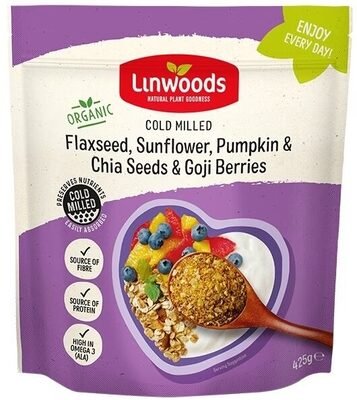
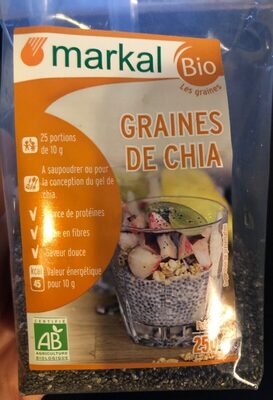

Photos and ingredient lists: Open Food Facts, a collaborative open-licence database, retrieved on 16 November 2026. Recipes change: the label on the packet in your hand is what counts.
The table
| No particular risk | To check | Avoid or contains gluten |
|---|---|---|
| Seeds labelled “gluten free” or with the Crossed Grain | Seeds with no label at all (nothing declared either way) | Seeds with a gluten traces warning |
| Ground flaxseed and flaxseed flour with no label | Seeds from loose bulk bins | |
| Mixes of seeds and flakes | Seeded, sesame or Nordic-style bread (wheat or rye) | |
| Granola and muesli with wheat, barley or non-certified oat flakes |
Sesame also comes as a paste: see tahini.
In short
- Chia, flax, pumpkin, sunflower, sesame: no gluten by nature.
- Gluten traces warnings are common on packets: Jardin Bio, Biocoop and Markal carry them.
- Traces warnings are voluntary: their absence guarantees nothing. Only the “gluten free” claim commits the manufacturer.
- Ground seeds are more exposed; in a seeded loaf, it’s the dough that counts.
A packet of seeds, one line that matters. The Nutrixe scanner reads the traces line and the “gluten free” claim, and tells you what it found. Discover the app.
Further reading: granola, millet, teff and sorghum, almond flour and what each logo is worth.
Sources
- Coeliac UK, A guide to grains, November 2024: flax/linseed (“seeds can be added to muesli”) and sesame (“seeds used in baking”) among the foods suitable for a gluten-free diet; a product carrying a “may contain” warning for gluten cereals should be avoided.
- Regulation (EU) No 1169/2011, Annex II: sesame and cereals containing gluten among the allergens to be emphasised; Article 36: information on the possible and unintentional presence of allergens is provided on a voluntary basis.
- Commission Implementing Regulation (EU) No 828/2014: the “gluten free” claim is reserved for foods containing no more than 20 mg/kg of gluten.
- AFDIAG, Lors de vos achats en magasin: loose bulk buying and products with a “may contain traces of gluten” warning advised against. Accessed 16 November 2026.
- Thompson T., Lee A. R., Grace T., Gluten contamination of grains, seeds, and flours in the United States: a pilot study, Journal of the American Dietetic Association, 2010; 110(6): 937–940.
- Open Food Facts, product entries 5016887003060 (Linwoods, seed mix), 3329488732508 (Markal, chia seeds), 3760020501754 (Jardin Bio étic, flaxseed), 3760121215789 (Biocoop, brown flaxseed), 3564707120678 (Bio Village, brown flaxseed flour) and 3329488211256 (Markal, pumpkin seeds), accessed 16 November 2026.
This information is no substitute for medical advice. How strict you need to be depends on your situation: if you have coeliac disease, talk to your doctor or to a patient association such as Coeliac UK.