Nutrixe
Gluten is a family of proteins made by three cereals: wheat, barley and rye. For most people, nothing shows that it is bad. For three groups of people, however, it really matters, and not in the same way.
That is the trap: three people can say the same sentence to the waiter, “I don’t eat gluten”, and have completely different needs.
What gluten is
In a grain of wheat, gluten is not really there yet. Its two kinds of proteins, gliadins and glutenins, are stored separately. Add water to the flour, knead, and they cling to one another until they form a supple, elastic network.
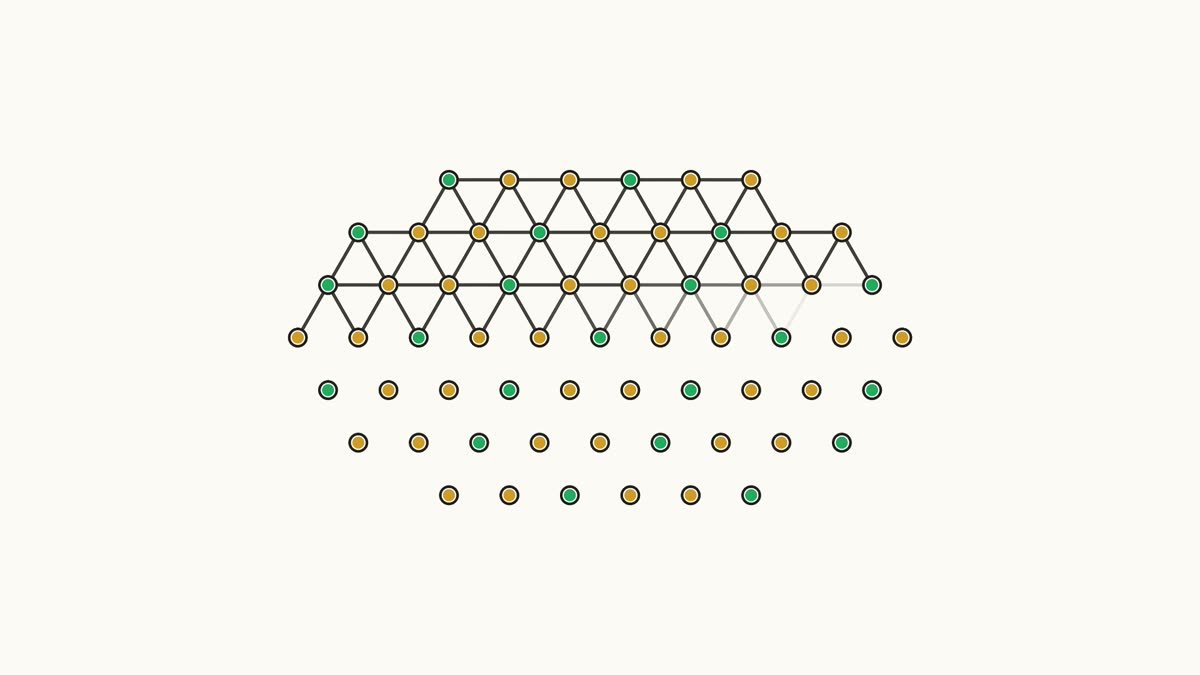
It is this network that traps the gas bubbles from the yeast: thanks to it, the dough rises instead of staying flat. The word itself comes from the Latin gluten, glue.
When we eat this network, digestive enzymes break it down almost completely. Almost: some fragments of the gliadins resist them and reach the gut intact, in everyone. In most people, they cause no problem at all. In some, they trigger a reaction.
Where it hides
Gluten is everywhere there is wheat, barley or rye: bread, pasta, biscuits, pizza, pastries. But this “glue” is so handy that it gets added where you would not expect it:
- sauces and ready meals, where it thickens and binds;
- some processed meats;
- beer, made from barley;
- ordinary oats, often contaminated with wheat: we explain this in our article on oats.
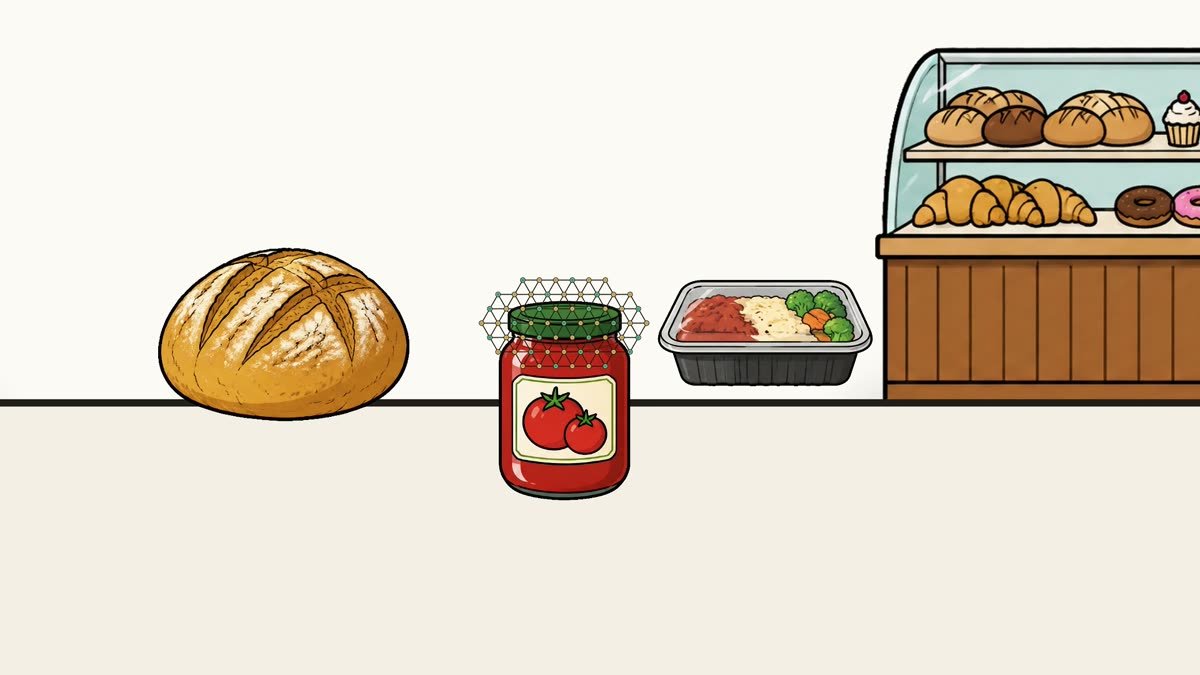
Our list of foods with and without gluten covers everything.
Is gluten bad for you?
If you have neither coeliac disease, nor a wheat allergy, nor gluten sensitivity, nothing shows that it does you any harm.
An American team followed more than 110,000 health professionals for 26 years. Those who ate the most gluten had no more heart disease than the others. The authors even sound a warning: avoiding gluten for no medical reason often means eating fewer whole grains, which do protect the heart.
Trouble begins when the body takes a dim view of these fragments. It can do so in three very different ways, which we detail in coeliac disease, gluten sensitivity, wheat allergy: three different things.
Wheat allergy: rare, fast, sometimes serious
In an allergy, the immune system has mistaken wheat proteins for a threat and keeps antibodies ready to react. Within minutes, hives appear on the skin, the throat swells, and sometimes the whole body goes into overdrive. It is the only one of the three that can be life-threatening.
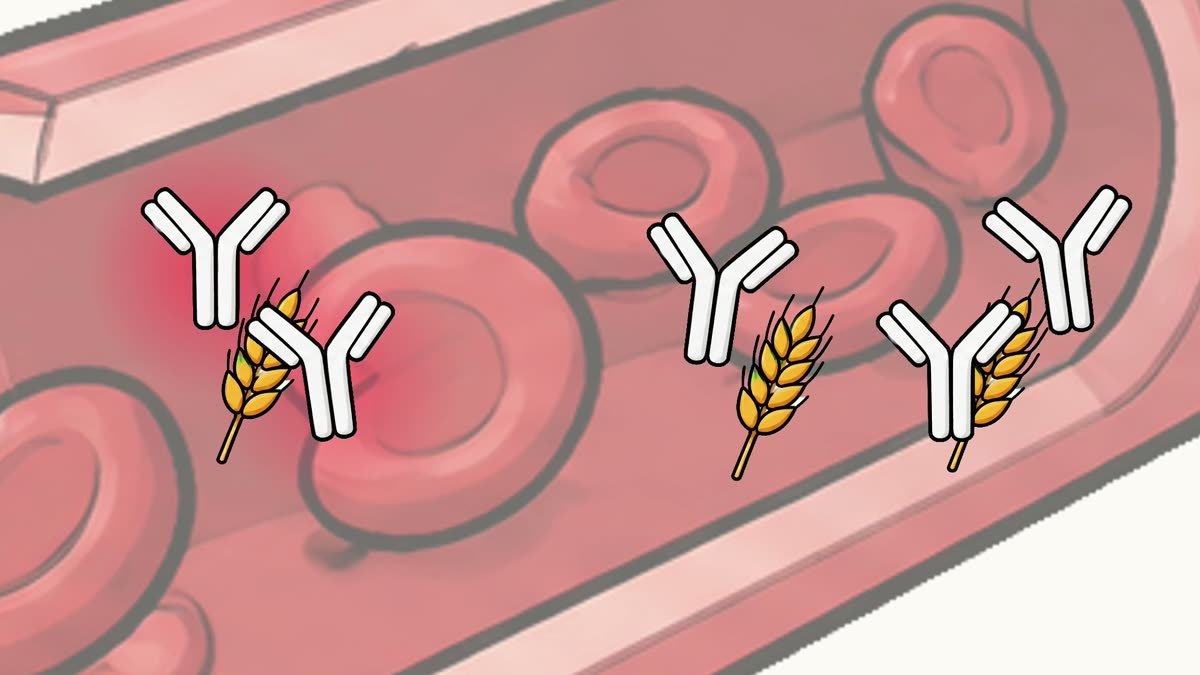
It is also the rarest. A large European review from 2023 found that about 1.6% of people say they are allergic to wheat, but that only 0.1% really are when this is checked with a medical test. In children, it often disappears as they grow up.
It has a strange form: in some people, wheat triggers nothing on its own, but causes a shock if it is followed by physical exercise, a glass of alcohol or an anti-inflammatory drug.
Coeliac disease: discreet, and down to the milligram
Coeliac disease is not an allergy: it is an autoimmune disease. When gluten fragments reach the gut, the immune system attacks its lining, and the villi, those thousands of tiny folds that absorb food, flatten out.
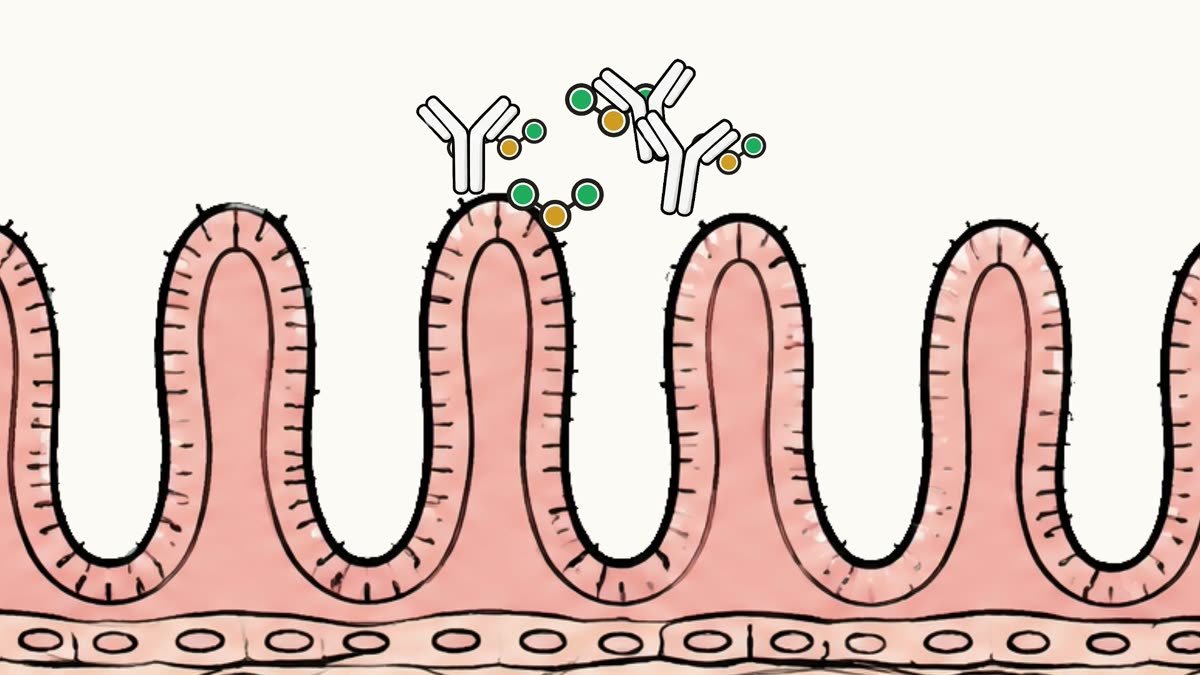
It affects about one person in a hundred, and often goes unnoticed: a little tiredness, a temperamental stomach, sometimes nothing at all. In the United Kingdom, Coeliac UK estimates that only 36% of people with coeliac disease are diagnosed. About a third of the population carries the genes that make it possible (HLA-DQ2 and DQ8), but most will never develop it, and we do not yet know what tips the balance.
For a person with coeliac disease, gluten is counted in milligrams. In 2007, an Italian team gave people with coeliac disease a capsule every day, without them knowing whether it contained gluten: with 50 mg a day, their gut was damaged within three months. That is why the “gluten-free” claim is capped at 20 mg per kilo.
One important piece of advice if you recognise yourself here: get tested before you stop eating gluten. The tests look for the reaction to gluten; with no gluten on the plate, they can wrongly come back normal. The process is explained in blood test, biopsy: how a diagnosis works.
Gluten sensitivity: real, but not always caused by gluten
The third person has neither an allergy nor coeliac disease, but after a plate of pasta, their stomach hurts, they bloat, they are exhausted. They are not alone: about one adult in ten worldwide says they are sensitive to gluten or wheat.
When researchers run the test blind, giving gluten and a placebo in turn without anyone knowing which is which, only 16 to 30% of these people really react to gluten.

The others are not making anything up: their pain is real. But the culprit is often elsewhere. In Norway, a team hid either gluten or fructans, wheat sugars that ferment in the gut, in muesli bars given to 59 people: the bloating came from the fructans, not from gluten. Expectation plays a part too: when you expect to be in pain, it hurts more.
For a minority, gluten does seem to be the cause, without anyone yet knowing why, and the very way these tests are run is now being questioned. The debate is open. What is certain is that pain that keeps coming back deserves a proper diagnosis.
Why a single label is not enough
One sentence, “I don’t eat gluten”, and three different needs:
- the person with an allergy must avoid wheat and keep their emergency treatment on them;
- the person with coeliac disease must steer clear of the slightest trace, for life;
- the sensitive person first needs to find out what is making them ill.
So a “gluten-free” label that is identical for all three does not really protect anyone. That is why, on Nutrixe, we never simply say that a place is “gluten-free”: we say what we know, where we got it from, and what remains at risk. The page understanding gluten-free explains how we classify each place.
In short
- Gluten is a family of proteins from wheat, barley and rye, which gives dough its elasticity.
- For most people, nothing shows that it is bad.
- Wheat allergy is rare and fast, sometimes serious; coeliac disease affects 1 person in 100, often without them knowing, and comes down to the milligram; gluten sensitivity is common, but gluten is not always the cause.
- If you think you have coeliac disease, get tested before you stop eating gluten.
See also: gluten intolerance: symptoms and diagnosis, “may contain” warnings and do oats contain gluten?
Sources
- Shewry P. R. et al., Philosophical Transactions of the Royal Society B (2002), The structure and properties of gluten: an elastic protein from wheat grain: with water, wheat gliadins and glutenins form the elastic gluten network.
- Shan L. et al., Science (2002), Structural basis for gluten intolerance in celiac sprue: a gliadin fragment resists all human digestive enzymes.
- Lebwohl B. et al., BMJ (2017), Long term gluten consumption in adults without celiac disease and risk of coronary heart disease: 110,017 health professionals followed for 26 years, no more heart disease among the biggest gluten eaters.
- Spolidoro G. C. I. et al., Allergy (2023), Prevalence estimates of eight big food allergies in Europe: wheat allergy self-reported by 1.6% of people, confirmed by food challenge in 0.1%.
- Keet C. A. et al., Annals of Allergy, Asthma & Immunology (2009), The natural history of wheat allergy: in children, wheat allergy often disappears with age.
- Faihs V. et al., Journal der Deutschen Dermatologischen Gesellschaft (2023), Wheat-dependent exercise-induced anaphylaxis: allergic shock to wheat triggered by a cofactor (exercise, alcohol, anti-inflammatory drug).
- Catassi C. et al., The Lancet (2022), Coeliac disease: reference review; prevalence of 0.5 to 2% depending on the country, about 1% on average.
- Levescot A. et al., Gut (2022), Immunopathogenesis and environmental triggers in coeliac disease: autoimmune mechanism, and triggering factors still poorly understood.
- Coeliac UK, About coeliac disease: about 1 person in 100, only 36% diagnosed in the United Kingdom. Accessed on 31 October 2026.
- Catassi C. et al., American Journal of Clinical Nutrition (2007), A prospective, double-blind, placebo-controlled trial to establish a safe gluten threshold for patients with celiac disease: 50 mg of gluten a day damages the gut of people with coeliac disease within 90 days.
- Biesiekierski J. R. et al., The Lancet (2025), Non-coeliac gluten sensitivity: about 10% of adults say they are sensitive; 16 to 30% react to gluten in a controlled test; role of fermentable carbohydrates and of the nocebo effect.
- Alaedini A. et al., The Lancet (2026), Non-coeliac gluten sensitivity: rethinking challenge studies: the method of challenge tests called into question.
- Skodje G. I. et al., Gastroenterology (2018), Fructan, rather than gluten, induces symptoms in patients with self-reported non-celiac gluten sensitivity: 59 people, symptoms triggered by fructans and not by gluten.
- Molina-Infante J., Carroccio A., Clinical Gastroenterology and Hepatology (2017), Suspected nonceliac gluten sensitivity confirmed in few patients after gluten challenge in double-blind, placebo-controlled trials: few gluten sensitivities confirmed under blind conditions.
This information is no substitute for medical advice. If you think you have coeliac disease, a wheat allergy or gluten sensitivity, talk to your doctor before changing your diet, or to a patient association such as Coeliac UK.